Printable Couples Conflict Workbook: Listen, Repair, Trust
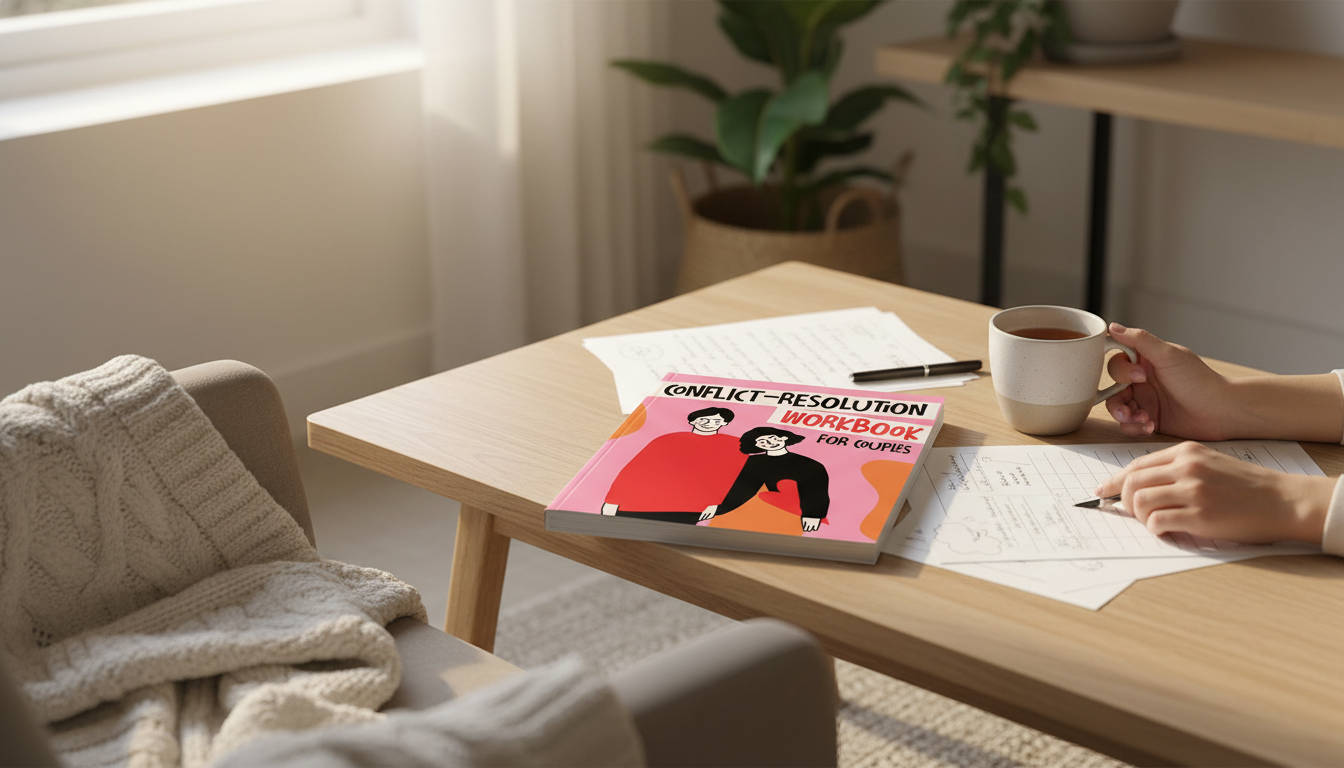
Conflict-Resolution Workbook for Couples: Printable Exercises to Improve Listening, Resolve Arguments, and Rebuild Trust
When disagreements loop into the same fight, it rarely means the relationship is broken—it usually means the system for talking through problems needs structure. A printable conflict-resolution workbook can turn emotional, reactive conversations into guided steps: slowing down, listening accurately, naming needs, and agreeing on next actions. The goal isn’t to “win” an argument; it’s to understand what’s happening underneath it and choose responses that protect trust.
Why conflicts keep repeating (and how structure helps)
Many arguments replay because the core issue is never clearly defined. Couples end up debating details—who said what, what happened first, what “always” happens—while the underlying need stays hidden. That’s why the conversation can feel intense and still go nowhere.
Escalation also tends to come from feeling unheard. Once a partner believes they’re not being listened to, tone, assumptions, and interruptions become the new topic. A guided workbook provides a shared script: one person speaks, the other reflects back, both name feelings and needs, then move to options. Written prompts also reduce “memory wars” by capturing what each person actually meant, not what the other feared they meant.
What a printable conflict-resolution workbook typically includes
A strong workbook isn’t just “journal pages.” It’s a practical set of tools that helps you exit the same loop and replace it with repeatable skills:
- A calm-down plan: pause rules, time limits, and how to re-enter the conversation without punishment or silent treatment.
- Active listening pages: short prompts for paraphrasing, checking accuracy, and asking clarifying questions.
- Emotion + need mapping: identifying what’s felt (hurt, anxiety, disappointment) and what’s needed (reassurance, autonomy, teamwork).
- Argument repair steps: how to apologize effectively, take responsibility, and make a small repair attempt in the moment.
- Decision and follow-through sheets: choosing one solution to test, assigning responsibilities, and setting a check-in date.
Common argument patterns and workbook exercises that help
| Pattern | What it feels like | Workbook exercise to use | Outcome to aim for |
|---|---|---|---|
| Interrupting or talking over each other | Racing to be understood | Speaker–Listener turn-taking with timed roles | Both partners feel accurately heard before problem-solving |
| Mind-reading and assumptions | Certainty about the other’s motives | Clarifying questions + “What I’m hearing is…” reflection | Fewer accusations; more verified facts |
| Bringing up old issues | No closure; lingering resentment | Single-issue agenda + parking-lot notes for later | One conflict resolved at a time |
| Stonewalling or shutting down | Overwhelm, flooding, withdrawal | Pause-and-return plan + self-soothing checklist | Conversation resumes with lower intensity |
| Defensiveness | Feeling blamed or attacked | Responsibility pie + validating one true point | Less escalation; faster repair attempts |
If you’d like extra context on patterns that reliably damage conversations—and what helps instead—see the Gottman Institute’s overview of “The Four Horsemen” and their antidotes. For a broader relationship-conflict perspective, the American Psychological Association’s guidance on managing conflict in relationships is also useful.
A simple 30–45 minute guided session (print, sit down, finish)
When conflict feels endless, a short, contained session is often more effective than a long talk that drifts. A workbook session can look like this:
- Step 1: Agree on ground rules (no interruptions, no insults, one topic). Set a timer for short rounds to prevent spiraling.
- Step 2: Define the issue in one sentence each. Compare sentences and combine into a shared statement that feels fair to both.
- Step 3: Take turns speaking and reflecting. The listener summarizes until the speaker says, “Yes, that’s it.”
- Step 4: Name feelings and needs on both sides. Keep needs specific (e.g., “a heads-up before plans change”).
- Step 5: Brainstorm options without judging. Then choose one small experiment to try for one week.
- Step 6: Write an agreement: who does what, by when, and what success looks like. Schedule a 10-minute check-in.
The “small experiment” approach matters: it turns conflict from a character debate into a shared problem to solve. If the plan doesn’t work, you revise it together—without rewriting the whole relationship.
Rebuilding trust after repeated arguments
Making it stick: routines that prevent the next blowup
Printable workbook option for structured practice
Recommended in-stock downloads
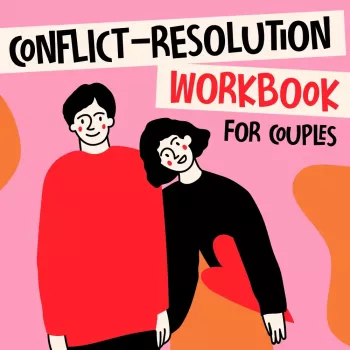
- Conflict-Resolution Workbook for Couples | Printable Relationship Communication eBook | Improve Listening, Resolve Arguments, Rebuild Trust
- Memory Boost Worksheets for Students & Adults | Printable Digital Download | Brain Training eBook, Memory Techniques, Study & Recall Tools (helpful for strengthening focus and follow-through during weekly check-ins)
At-a-glance: what to look for in a couples conflict-resolution workbook
| Feature | Why it matters | How to use it weekly |
|---|---|---|
| Speaker–Listener structure | Prevents interruptions and defensiveness | Use for one tough topic per week |
| De-escalation plan | Stops arguments from turning into blowups | Write personal signs of overwhelm + reset rules |
| Needs-based prompts | Moves beyond blame to what each partner requires | Translate complaints into needs and requests |
| Agreements and follow-up | Turns talks into consistent change | Schedule one check-in and revise the plan |
FAQ
How often should couples use a conflict-resolution workbook?
Plan on a weekly 15–20 minute maintenance session, plus as-needed use during conflicts. Keep it to one issue per session and always add a brief follow-up check-in to confirm what’s improving (or what needs adjusting).
Can a workbook help if one partner shuts down during arguments?
Yes—use pause-and-return rules, shorter timed rounds, and written prompts that lower pressure in the moment. If shutdown involves fear, intimidation, or repeated inability to re-engage, professional support can help make the process safe and workable.
What if the same argument keeps coming back even after talking it through?
Re-check the underlying need, review whether the last agreement was actually met, and narrow the discussion to one solvable piece you can test for a week. If the pattern persists across multiple topics, counseling can help identify deeper cycles and repair strategies.











Leave a comment