Calm Your Mind: Guided Audio Meditations for Anxiety
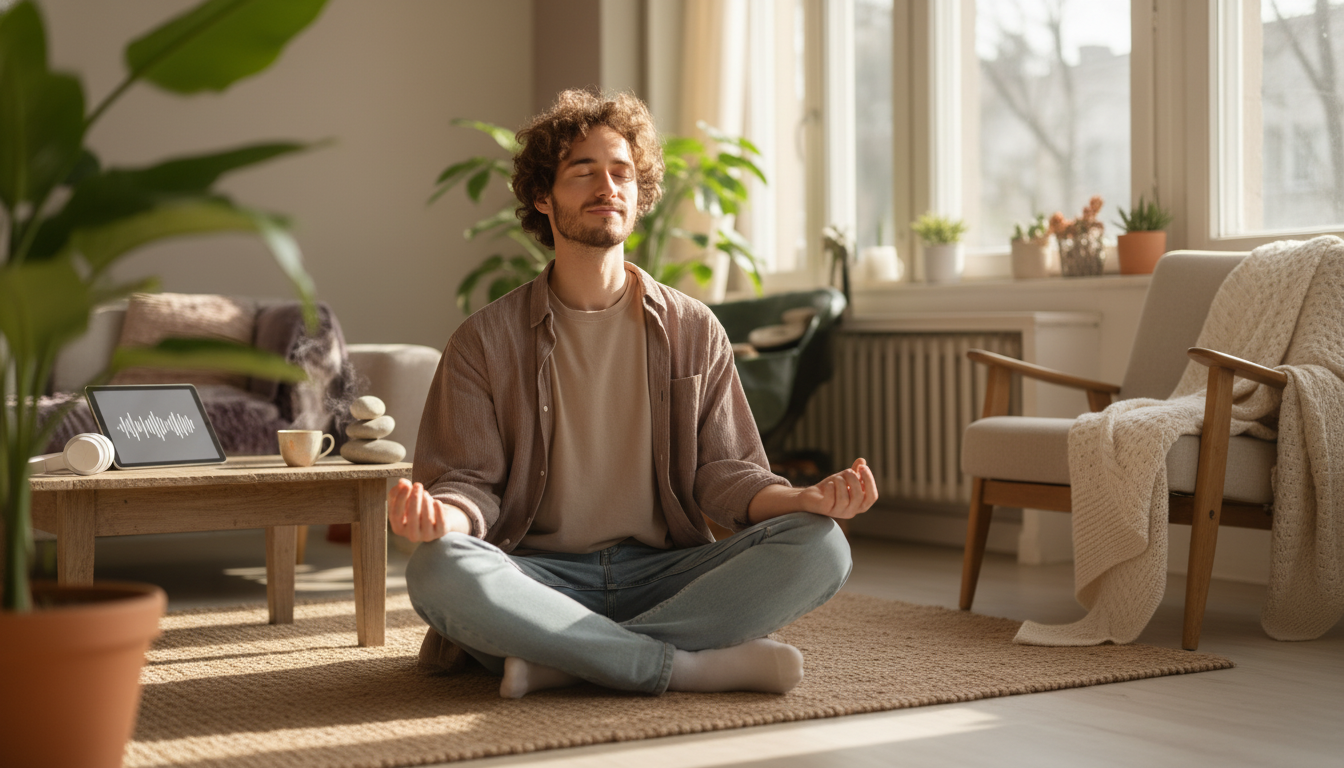
Calm Your Mind: A Guided Meditation Audio Course for Anxiety Relief
Racing thoughts, a tight chest, and constant worry can make even simple tasks feel heavy. A guided meditation audio course offers a structured, repeatable way to practice calming skills—without needing to “figure it out” in the moment. This series is designed for short, listen-anywhere sessions that help settle the nervous system, build steadier attention, and create a reliable wind-down routine for stressful days and restless nights.
What this guided meditation series is
This guided meditation series is an audio-based sequence of practices built around one core idea: when anxiety ramps up, you don’t need perfect calm—you need a clear path back to steadier ground. With simple cues, intentional pauses, and repeatable session styles, the course supports consistency: press play, follow the guidance, and return to the same tracks whenever life feels noisy.
- An audio-based sequence of guided practices focused on easing anxious activation and returning to a steadier baseline
- A format that supports consistency: press play, follow the cues, and repeat sessions as needed
- Designed for common anxiety patterns: looping thoughts, body tension, anticipatory worry, and difficulty switching off at night
- Best used as a daily micro-practice (5–20 minutes) plus “as-needed” sessions during spikes
For a closer look at the product itself, explore Calm Your Mind: Guided Meditation Series (audio course).
Who it’s for (and when it can help most)
Guided audio meditation tends to work best when you want support that’s immediate and low-friction—something you can do without setting up a big routine. It’s especially helpful if anxiety shows up as mental looping, physical tension, or trouble winding down at night.
- People who feel mentally “stuck” in what-if thinking and need a simple cue to return to the present
- Those who carry anxiety in the body—tight shoulders, shallow breathing, jaw tension, stomach fluttering
- Busy schedules that make longer mindfulness routines hard to maintain
- Moments that commonly trigger anxiety: before sleep, before meetings, after conflict, during transitions, or after scrolling/overstimulation
- Not a replacement for medical care; consider professional support for severe anxiety, panic, trauma symptoms, or persistent insomnia
Common anxiety moments and a matching meditation focus
| Moment | What it feels like | Practice focus |
|---|---|---|
| Before sleep | Mind won’t stop planning | Body scan + slower exhale |
| Midday overwhelm | Too many tasks, scattered attention | 3-minute reset + grounding |
| Social or performance stress | Heart racing, self-judgment | Breath counting + compassionate cues |
| After bad news | Tight chest, spiraling scenarios | Labeling thoughts + returning to sound |
| Morning dread | Immediate tension on waking | Gentle intention-setting + posture relaxation |
What to expect from the sessions
Many people quit meditation because they assume it should feel instantly blissful or silent. In practice, anxiety relief often comes from a smaller win: noticing you’ve drifted into worry, then returning—without scolding yourself. Over time, that “return” becomes a skill you can access in real life.
- Clear guidance with pauses to practice rather than constant talking
- A predictable flow: settle posture, regulate breathing, anchor attention, notice thoughts, return gently, close with a calm cue
- Options to practice seated, lying down, or walking slowly depending on energy levels
- Progress that is often subtle: fewer reactivity spikes, faster recovery after stress, improved ability to fall back asleep
For a quick overview of meditation safety and effectiveness, see the National Center for Complementary and Integrative Health (NCCIH) and the American Psychological Association (APA) guide to mindfulness meditation.
A simple 7-day listening plan
Consistency beats intensity. A short session repeated daily can teach your body what “downshifting” feels like—and that’s often where the real relief starts. Use this plan as a gentle ramp-up rather than a strict challenge.
7-day plan at a glance
| Day | Timing | Goal |
|---|---|---|
| 1 | Anytime | Start small and finish |
| 2 | Same time as Day 1 | Build familiarity |
| 3 | Evening | Release physical tension |
| 4 | Before a stress trigger | Practice in real life |
| 5 | Weekend or quieter block | Go deeper |
| 6 | Bedtime | Downshift for sleep |
| 7 | Preferred time | Lock in a repeatable routine |
Tips to get more relief from guided audio meditation
If you want a complementary, structured way to strengthen focus and reduce mental scatter outside meditation time, Memory Boost Worksheets for Students & Adults can support attention habits and recall routines that many people find calming when anxiety makes thinking feel slippery.
When to combine meditation with extra support
For practical mindfulness guidance that’s easy to blend into daily life, the NHS mindfulness overview is a helpful reference.
Calm Your Mind: Guided Meditation Series (audio course)
| Item | Details |
|---|---|
| Title | Calm Your Mind: Guided Meditation Series | Audio Course | Anxiety Relief Meditation |
| Price | 100.00 USD |
| Availability | In stock |
| Format | Audio course (guided meditation series) |
FAQ
How long should a guided meditation be for anxiety relief?
Start with 5–10 minutes to build consistency, then use 10–20 minutes when time allows. Short sessions repeated often are commonly more helpful than occasional long sessions, especially during stressful weeks.
What if guided meditation makes anxiety feel worse at first?
Sometimes increased awareness temporarily amplifies sensations; try shorter sessions, keep your eyes open, and use grounding anchors like sounds in the room or feet on the floor. If distress escalates or feels trauma-related, stop and consider professional support.
Can guided meditation help with sleep anxiety?
Yes—used as a wind-down tool, it can help your body shift toward rest. Try listening earlier in your bedtime routine, lower stimulation (dim lights, quiet environment), and focus on slower exhales or a body scan rather than trying to force sleep.









Leave a comment