Decode Dog & Cat Temperament: Behavior Cues That Help
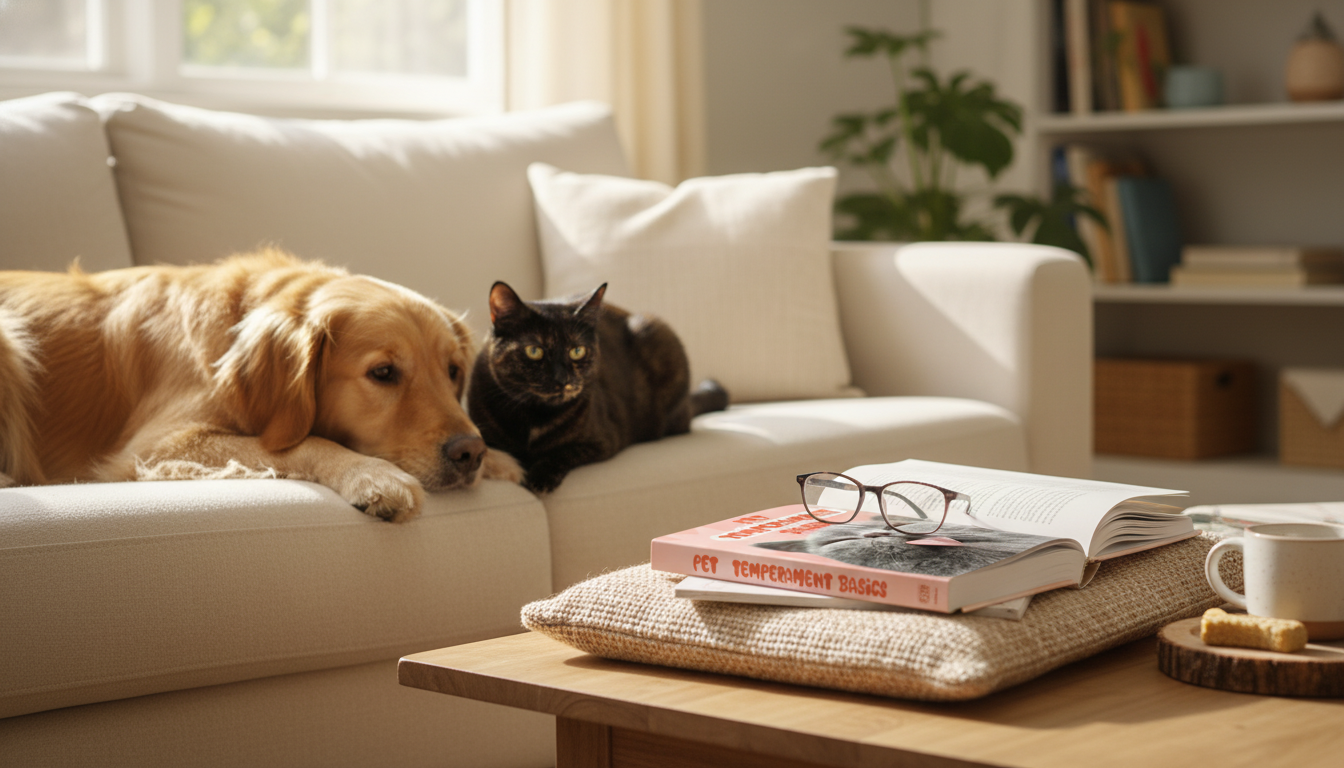
Understanding Your Pet’s Temperament: Decoding Dog and Cat Behavior for Better Care and Training
Temperament shapes how a dog or cat reacts to people, handling, new places, other animals, and daily routines. Learning to spot consistent patterns—alongside moment-to-moment signals like body language—helps prevent misunderstandings, reduces stress, and makes training more effective. This guide breaks down common temperament types, what behavior cues mean, and how to tailor care and training to the individual pet in front of you.
Temperament, personality, and mood: what’s actually being observed
It’s easier to help a pet when the “why” behind a behavior is clear. A pet that snaps during nail trims might be sensitive to restraint (temperament), worried because of past rough handling (personality/history), or reacting to sore paws that day (mood/state).
- Temperament: relatively stable tendencies like sociability, sensitivity to noise, impulse control, and tolerance for handling.
- Personality: the broader set of traits shaped by temperament plus learning history and environment.
- Mood/state: short-term factors (pain, hunger, sleep debt, hormone cycles, recent conflict) that can temporarily change behavior.
- Why labels can mislead: words like “stubborn,” “spiteful,” or “dominant” often describe unmet needs, fear, or unclear reinforcement—not a fixed character flaw.
Fast, reliable body-language cues in dogs
Dogs communicate quickly and quietly. Catching early signals helps you lower the intensity before a growl or lunge becomes the only option left.
- Relaxed vs. stressed: loose body, soft eyes, normal breathing vs. stiff posture, panting when not hot, scanning the environment.
- Fear and uncertainty: tucked tail (or lowered posture), lip licking, yawning, paw lift, backing away, “whale eye,” freezing.
- Overarousal: jumping, mouthing, frantic sniffing, inability to respond to known cues; treat as a regulation issue, not disobedience.
- Friendly approach: curved body, loose wag (not just “tail wag”), play bow, self-handicapping in play.
- Conflict signals: freezing, hard stare, closed mouth, weight shift forward; increase distance and reduce pressure before escalation.
Fast, reliable body-language cues in cats
Cats often look “fine” right up until they aren’t—especially when they’re trying to avoid conflict. Small changes in tail, ears, and posture can be the whole story.
- Comfort cues: slow blink, relaxed whiskers, upright tail with a hook at the tip, kneading, relaxed ears that pivot normally.
- Stress cues: crouching, tail tucked close, ears to the side/back (“airplane ears”), dilated pupils (not due to low light), hiding and reduced appetite.
- Overstimulation during petting: tail flicking, skin ripples, sudden head turns toward the hand, ears rotating back; stop before a swat or bite.
- Defensive fear: flattened ears, puffed fur, arched back, sideways stance; create escape routes and reduce cornering.
- Redirected aggression: sudden attack after a startling event (e.g., outdoor cat at window); separate and calm, then manage triggers.
Temperament traits that matter most for everyday life
Some traits predict daily friction points more than others—like how easily a pet startles, how quickly they recover, and how they handle “not right now.” These patterns help you choose the most humane and effective training plan.
Quick temperament-to-care map
| Temperament pattern | Common signs | What helps most | Avoid |
|---|---|---|---|
| Cautious / shy | Hides, startles easily, slow to approach | Predictable routine, safe zones, choice-based treats, gradual exposure | Forced greetings, grabbing/carrying, flooding with busy environments |
| Highly social | Seeks contact, vocalizes for attention, follows closely | Structured interaction, polite greeting training, enrichment between attention bursts | Accidental reinforcement of jumping/meowing on demand |
| Sound/motion sensitive | Barks at noises (dogs), startles and bolts (cats), scanning | Noise management, decompression walks/quiet play, desensitization | Punishment for startle responses, chaotic training settings |
| Low frustration tolerance | Demand barking/meowing, leash reactivity, nipping, pacing | More sleep, chew/forage outlets, “wait” games, shorter sessions with high reward rate | Long sessions, delayed rewards, tight restraint |
| High prey/play drive | Chasing, stalking, pouncing, intense tug | Controlled outlets (flirt pole, wand toys), impulse control, decompression time | Unmanaged off-leash chasing, laser-only play with no “catch” finale |
What shapes temperament: genetics, early experiences, and health
For evidence-based guidance on behavior and humane training, consult resources from the American Veterinary Society of Animal Behavior (AVSAB), the American Animal Hospital Association (AAHA), and the ASPCA.
A simple at-home temperament check (without provoking reactions)
Training and care strategies matched to temperament
For a structured reference you can revisit, Understanding Your Pet’s Temperament: A Complete Guide to Decoding Dog and Cat Behavior for Better Care and Training walks through observation, interpretation, and humane training decisions step by step. If you’re building calmer routines for an indoor cat, Enrichment Ideas for Indoor Cats offers practical play plans and home setup tweaks that reduce stress-driven behaviors.
When behavior needs professional help
A practical guide to keep on hand
FAQ
Can a pet’s temperament change over time?
Core tendencies are often stable, but behavior can shift with learning, environment changes, aging, and health. Sudden changes warrant a veterinary check, while gradual, reward-based training can significantly improve coping skills and confidence.
How can fear-based behavior be distinguished from stubbornness or defiance?
Fear often shows up as avoidance, freezing, lip licking, crouching, tucked posture, and sudden inability to perform known cues when the trigger is close. Punishment typically worsens fear; lowering trigger intensity and reinforcing calm, alternative behaviors is more effective.
What are easy ways to reduce stress in multi-pet homes?
Distribute resources (food, water, beds, litter boxes), add safe zones and vertical space, and prevent ambush points in hallways or doorways. Use controlled introductions and provide individual play/enrichment; seek professional help if aggression or repeated fights occur.












Leave a comment