Homework Routine Toolkit: Build Independent Study Habits
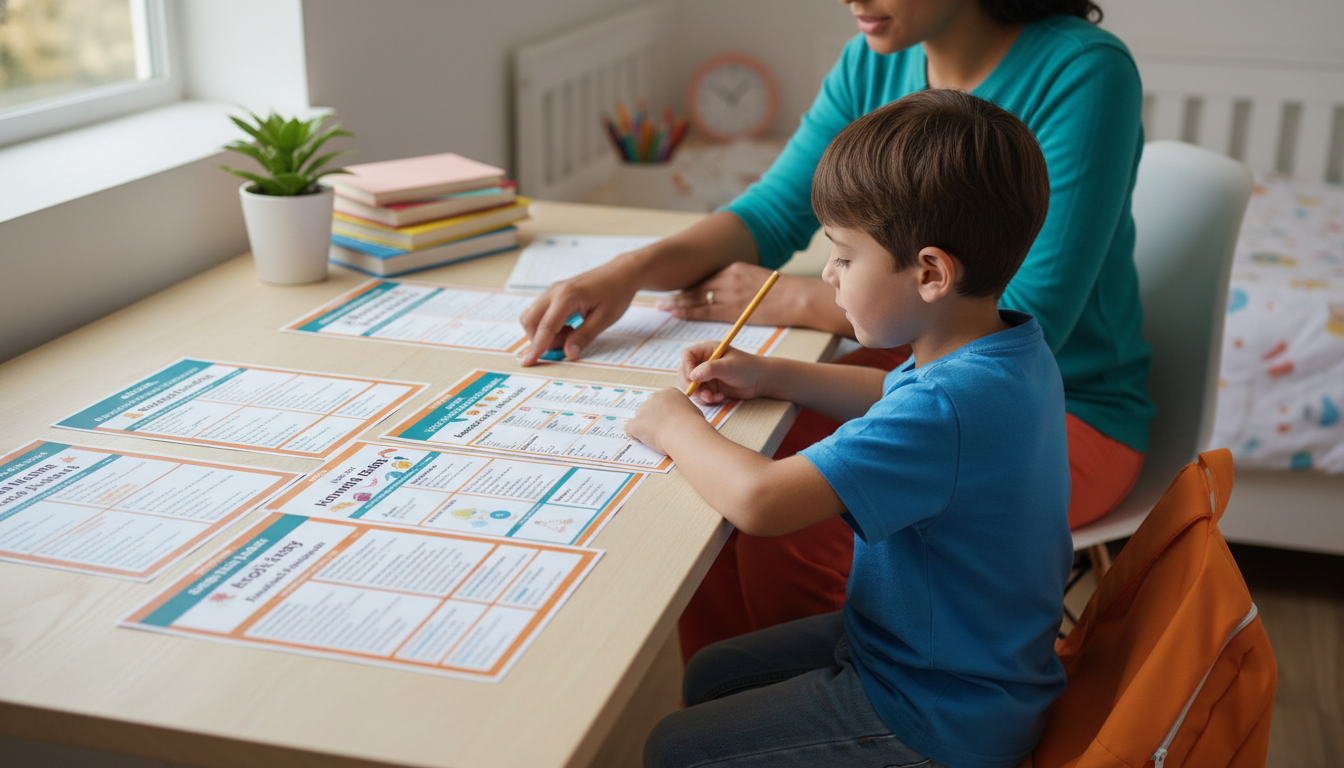
A consistent homework routine can reduce nightly conflict, improve follow-through, and help kids learn to manage tasks on their own. This guide lays out a practical, parent-friendly system for setting up the environment, teaching a repeatable process, and gradually transferring responsibility—supported by a printable toolkit you can use right away.
What “independent learning” looks like at home
Independence doesn’t mean kids never need support. It means they can start, continue, and finish most school tasks with a predictable process—and ask for help in a way that actually moves them forward.
- Completes a short “start-up routine” without reminders: sets materials out, opens planner, identifies what’s due.
- Uses a simple plan: picks a first task, estimates time, and starts within a few minutes.
- Checks work for common mistakes using a quick checklist rather than relying on a parent to proofread everything.
- Asks for help strategically: describes what was tried, what’s confusing, and shows the exact problem.
- Builds stamina over time: starts with small, repeatable wins and increases work blocks gradually.
If this feels far away right now, that’s normal—especially when homework demands rise faster than a child’s executive-function skills. Research and practical guidance on these skills is widely discussed by education experts, including resources from Harvard Graduate School of Education.
Set up a homework system that removes friction
When homework is hard to start, the fastest improvement often comes from removing tiny points of resistance: missing pencils, wandering for chargers, “Where’s my folder?”, or unclear start times. The goal is a predictable loop your child can repeat even on tired days.
- Choose a consistent location with minimal distractions; keep supplies in a single bin or drawer to eliminate searching.
- Create a visual “homework landing zone” for backpack, folders, and devices so items don’t disappear between school and dinner.
- Decide on a predictable daily window (even if the exact time shifts) and pair it with a short transition routine (snack, movement, bathroom).
- Use a timer to make work sessions concrete; start with shorter blocks for younger kids and extend as stamina grows.
- Build in a reset step: a 2-minute tidy at the end to reduce tomorrow’s resistance.
After-school routine template (example)
| Step | What the child does | Parent role | Time |
|---|---|---|---|
| Arrive home | Backpack goes to landing zone; planner out | Greet, brief check-in | 2–3 min |
| Reset | Snack + quick movement break | Keep it short and consistent | 10–15 min |
| Plan | List tasks; pick first task; estimate time | Ask: “What’s first?” | 3–5 min |
| Work block 1 | Focused work; timer running | Silent support nearby if needed | 15–30 min |
| Break | Water/stretch; no screens if they derail focus | Set boundary on length | 3–5 min |
| Work block 2 | Finish remaining tasks; check work | Prompt checklist use, not answers | 15–30 min |
| Pack up | Submit/put in folder; set out what’s needed tomorrow | Praise effort + completion | 2–4 min |
Teach a repeatable homework process (so parents aren’t the manager)
Many kids interpret “Do your homework” as one giant, fuzzy task. A short, repeatable process makes homework feel doable and helps kids learn how to learn.
- Use a 4-step loop: Understand the task → Plan the steps → Do the work → Check and submit.
- Model “thinking out loud” briefly, then switch to prompts: “What is the question asking?” “What information is given?”
- Keep directions visible: a one-page checklist on the desk helps kids self-correct without a lecture.
- Separate coaching from correcting: focus on the process (planning, starting, checking) before focusing on errors.
- End with a quick reflection: “What helped today?” “What will you do first tomorrow?” to build self-awareness.
If you’d like ready-to-print pages that make this routine easier to keep consistent, Homework Help Made Easy Toolkit for Parents – Printable Guide for Creating Study Habits, Homework Strategies & Independent Learning is designed to function like a simple “homework operating system” you can post near the workspace and reuse weekly.
Homework help without doing the homework
For evidence-based guidance on supportive homework involvement, see the American Psychological Association’s suggestions for helping children with homework, which emphasize structure, encouragement, and collaboration with teachers when needed.
Building study habits that last beyond tonight
Some kids benefit from structured practice with recall and memory strategies alongside the homework routine. Memory Boost Worksheets for Students & Adults can be used in short sessions to strengthen the “remember it later” side of studying.
Also protect sleep: tired brains work slower and get frustrated faster. The CDC’s sleep recommendations are a helpful reference when deciding how late homework should go on school nights.
Printable support: Homework Help Made Easy Toolkit for Parents
Find it here: Homework Help Made Easy Toolkit for Parents – Printable Guide for Creating Study Habits, Homework Strategies & Independent Learning.
Common roadblocks and quick fixes
FAQ
How long should a daily homework routine take?
Many elementary students do best with 20–45 minutes total in short blocks, while middle school may be closer to 45–90 minutes depending on classes. Prioritize consistency and timed work sessions with brief breaks, and check school guidance if the workload regularly pushes into late-night hours.
What should a parent do when a child refuses to do homework?
Stay calm, validate the feeling, then offer a tiny first step (2 minutes) and a choice about where or what to start. Keep help time-boxed, use consistent boundaries, and involve the teacher if refusal is frequent or assignments feel unclear or excessive.
How can parents help without giving answers?
Use prompting questions (“What is it asking?” “Where could you find an example?”) and a 3-before-me rule (re-read directions, check notes, try a similar problem) before stepping in. Coach the process—plan, start, check—so your child learns what to do next even when you aren’t nearby.









Leave a comment