Balanced Meal Plan Recipes: 7-Day or 30-Day Menu
Healthy Meal Plan & Recipe Collection: One-Week or One-Month Balanced Recipes for Breakfast, Lunch, Dinner & Snacks
A structured meal plan can make healthy eating easier by removing daily decision fatigue, simplifying grocery shopping, and keeping meals balanced across protein, fiber-rich carbs, healthy fats, and colorful produce. Whether you prefer a one-week reset or a one-month rhythm, the goal is the same: consistent, satisfying meals that support steady energy, digestion, and realistic habits you can keep.
What “balanced” meals look like in real life
A balanced meal usually includes four anchors: protein, high-fiber carbohydrates, healthy fats, and produce. This combo supports fullness and more stable energy across the day, especially when meals are spaced consistently.
- Use a visual plate method: fill about half your plate with non-starchy vegetables and fruit, add a palm-sized protein, include a fist-sized whole grain or starchy vegetable, and finish with a thumb-sized fat (olive oil, nuts, avocado).
- Prioritize protein earlier: protein-forward breakfasts and lunches can reduce afternoon cravings (eggs, Greek yogurt, tofu scramble, chicken, lentils).
- Choose fiber-forward carbs most of the time: oats, brown rice, quinoa, beans, whole-grain bread, sweet potatoes.
- Don’t forget hydration and minerals: water, unsweetened tea, broth-based soups, plus potassium-rich foods like beans, leafy greens, and bananas.
For a simple reference point, the Harvard Healthy Eating Plate and USDA MyPlate both reinforce the same big idea: build meals around plants, choose quality proteins, and keep portions practical.
Choosing a one-week vs one-month plan
Both formats work—what matters is picking the structure you’ll follow when life gets busy.
- One-week plans are great for beginners, hectic schedules, and testing recipes without committing to a full month.
- One-month plans are ideal for building routine, reducing grocery runs, and repeating “core meals” with small flavor shifts.
- A hybrid approach often feels easiest: repeat 2–3 breakfasts and 2 lunches, then rotate dinners and snacks to avoid boredom.
- If weight change is a goal, consistency over time matters more than novelty; a month format can make adherence feel automatic.
- Dietary needs can be layered in by swapping proteins (chicken ↔ tofu/beans), adjusting dairy, or choosing gluten-free grains.
If you want a ready-to-use structure, the Healthy Meal Plan & Recipe Collection eBook (one-week or one-month format) is designed for plug-and-play planning with balanced breakfast, lunch, dinner, and snack ideas.
A simple template for planning breakfasts, lunches, dinners, and snacks
Instead of hunting for brand-new recipes every day, use repeatable formats that stay balanced even when ingredients change.
Breakfast: protein + fiber first
- Greek yogurt + berries + chia (add oats or granola if you need more carbs)
- Oatmeal + peanut butter + banana (add a side of eggs or yogurt for extra protein)
- Veggie omelet + whole-grain toast + fruit
Lunch: the “power bowl” formula
Build a bowl with greens + grains/beans + protein + crunch + dressing. Example: quinoa, chickpeas, cucumber, feta, and olive oil + lemon.
Dinner: veggies and protein, then carbs as needed
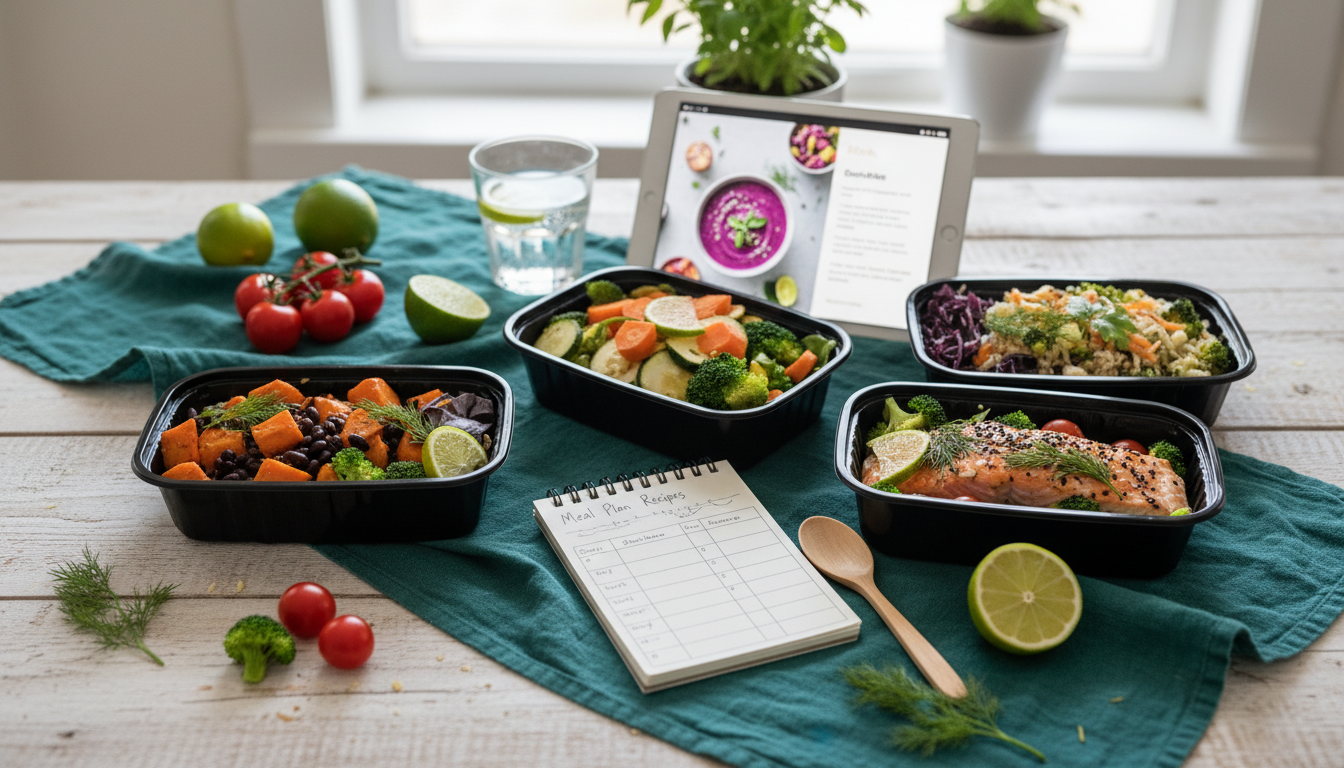
Center the plate on vegetables and a protein, then add a measured carbohydrate portion based on hunger and activity (salmon + roasted broccoli + brown rice is a classic).
Snacks: purposeful, not random
- Apple + almonds
- Hummus + carrots
- Cottage cheese + fruit
Flavor strategy: rotate sauces and seasonings (taco seasoning, Italian herbs, curry, lemon-garlic) so repeat meals still feel different.
Sample 7-day overview (mix-and-match ideas)
Use this schedule as a starting point, then swap meals within the week to match leftovers, your calendar, and what you actually want to eat. For faster weeknights, plan at least two sheet-pan dinners and one slow-cooker or one-pot meal.
| Day | Breakfast | Lunch | Dinner | Snacks |
|---|---|---|---|---|
| Mon | Overnight oats + berries | Turkey/bean chili leftovers + salad | Sheet-pan chicken + mixed veggies | Apple + almonds; yogurt |
| Tue | Egg scramble + spinach + toast | Quinoa bowl (chickpeas, cucumber, feta) | Salmon + roasted broccoli + rice | Hummus + carrots; fruit |
| Wed | Greek yogurt + chia + fruit | Chicken/Tofu wrap + side veggies | Stir-fry (protein + veg) + noodles/rice | Cottage cheese; nuts |
| Thu | Oatmeal + nut butter + banana | Lentil soup + whole-grain bread | Taco bowls (beans/protein, salsa, avocado) | Popcorn; berries |
| Fri | Smoothie (protein + greens + fruit) | Leftover taco bowl + extra veggies | Whole-wheat pasta + marinara + side salad | Cheese + grapes; seeds |
| Sat | Veggie omelet + fruit | Big salad (protein + grains + dressing) | One-pot curry (lentils/chicken) + quinoa | Dark chocolate square; yogurt |
| Sun | Whole-grain pancakes + fruit | Leftover curry + greens | Roast protein + vegetables + potatoes | Trail mix; sliced veggies |
Grocery list building blocks (so shopping stays simple)
Shopping is easier when you buy flexible ingredients that work across multiple recipes. The Dietary Guidelines for Americans (2020–2025) emphasizes overall patterns—this “building block” approach supports that without requiring perfection.
Meal prep that actually fits a busy week
For people who like checklists and structure beyond recipes, pairing meal prep with simple tracking tools can keep momentum going. The Memory Boost Worksheets for Students & Adults can also be used as a practical framework for planning routines, remembering prep steps, and sticking with weekly habits.
Using a structured recipe collection to stay consistent
If you want an organized set of balanced options you can run for a week or repeat for a month, start with the Healthy Meal Plan & Recipe Collection | One-Week or One-Month Healthy Meal Plan with Recipes for Breakfast, Lunch, Dinner & Snacks | Balanced Nutrition eBook.
FAQ
How much weight will I lose if I eat one meal a day for 30 days?
Results vary widely based on total calories, food quality, activity, sleep, and starting weight, and some people end up very hungry, low-energy, or overeating later. Sustainable weight loss typically comes from a consistent, modest calorie deficit with adequate protein and fiber; check with a clinician first if you have medical conditions, are pregnant, have a history of disordered eating, or take diabetes medications.











Leave a comment