Build Emotional Strength in Preschoolers (Ages 3–5)
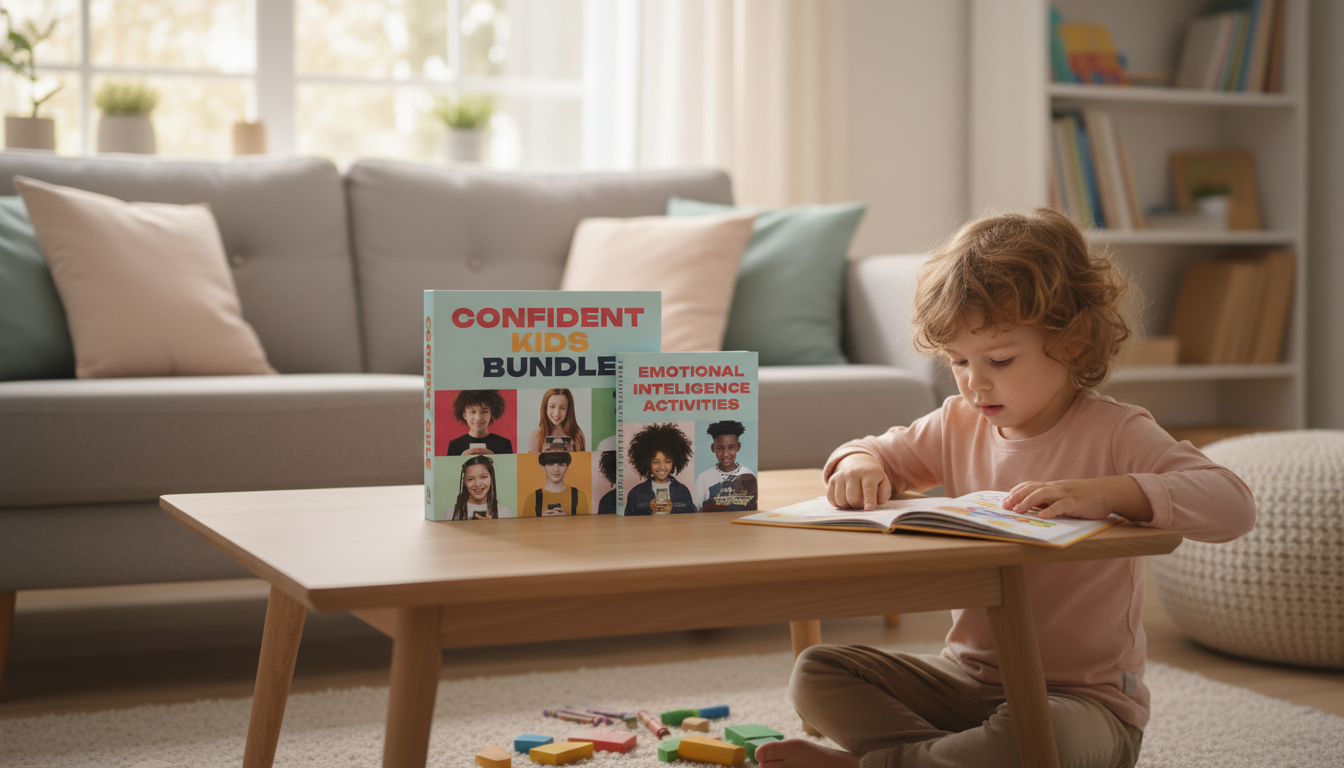
Early childhood is a prime window for building the skills that support confidence, resilience, and healthy relationships. A practical bundle that combines a parenting guide, hands-on self-esteem activities, and an emotional intelligence checklist can help caregivers turn everyday moments—playtime, transitions, mistakes, and big feelings—into steady practice for emotional strength.
What “emotional strength” looks like in preschoolers
For ages 3–5, emotional strength doesn’t mean “never crying” or “always sharing.” It looks like small, repeatable skills that grow with patient adult support—especially in the moments that tend to feel messy.
- Naming feelings with simple words (mad, sad, worried, proud) and matching them to body cues (tight tummy, hot face, wiggly hands).
- Recovering from small setbacks with support: trying again after a spill, waiting a turn, tolerating “not yet.”
- Growing independence while still seeking reassurance: “I can do it” plus “stay close.”
- Building social confidence: greeting, sharing space, and repairing after conflict (simple apologies, offering a toy back).
- Using calming strategies with adult coaching: breathing, sensory tools, quiet corners, or movement breaks.
Common moments that build confidence (and what to practice)
| Everyday moment | What the child feels | Caregiver coaching phrase | Skill being built |
|---|---|---|---|
| Drop-off or separation | Worried, clingy | “You’re safe. I’ll come back after snack.” | Trust, coping with transitions |
| Losing a game | Disappointed, frustrated | “It’s okay to feel upset. Let’s try again.” | Resilience, persistence |
| Sibling conflict | Angry, jealous | “Hands gentle. Tell them what you need.” | Boundaries, communication |
| New task (shoes, puzzles) | Unsure, embarrassed | “Let’s do the first step together.” | Confidence through scaffolding |
| Big excitement (party, playground) | Overstimulated | “Pause—take 3 slow breaths, then choose.” | Self-regulation, decision-making |
What’s included in the Confident Kids Bundle (3-in-1)
If consistent coaching is the goal, it helps to have tools that match how preschoolers actually learn: short, concrete, playful, and repeatable. Confident Kids Bundle: Nurturing Emotional Strength brings three pieces together so caregivers can teach skills without needing to “wing it” in the moment.
- Parenting guide: clear, repeatable scripts and routines for coaching feelings, behavior, and confidence-building habits.
- Self-esteem activities (ages 3–5): playful prompts that reinforce effort, strengths, kindness, and brave tries.
- Emotional intelligence checklist: an easy way to notice progress over time and spot areas needing extra support (feelings vocabulary, calming skills, social repair).
- Designed for short practice: activities that fit into morning routines, car rides, bedtime, and after-school decompression.
- Useful for multiple caregivers: consistent language across parents, grandparents, babysitters, and teachers improves follow-through.
For families who also like structured, printable tools beyond preschool topics, Memory Boost Worksheets for Students & Adults can be a helpful add-on for older siblings or caregivers who enjoy guided practice and checklists.
How to use the bundle as a simple weekly routine
A “little and often” routine is usually more effective than big sit-down lessons. Preschoolers build emotional skills through repetition, play, and your calm presence.
- Choose one focus skill for the week (waiting, handling mistakes, trying new things, calming down) and repeat it across contexts.
- Pair reading + doing: skim one guide section, then do one short activity the same day so the child connects words with action.
- Use the checklist once per week: mark what’s improving and pick one small next step rather than trying to fix everything at once.
- Aim for 5–10 minutes instead of long sessions; young kids learn best in short bursts.
- End the day with a “brave moment” reflection: name one effort the child made, even if the outcome wasn’t perfect.
Self-esteem activities that work best for ages 3–5
The most effective self-esteem builders at this age are simple: they connect confidence to effort, problem-solving, and kindness rather than perfection.
- Effort praise prompts: highlight strategies (“You kept trying”) instead of labels (“You’re so smart”) to support persistence.
- Strength-spotting games: identify strengths in characters, siblings, or stuffed animals, then connect those strengths back to your child.
- Choice-building: offer two acceptable options to grow autonomy (“Do you want the blue cup or the red cup?”).
- Role-play with toys: practice turn-taking, saying “stop,” and asking for help in low-pressure pretend scenarios.
- Kindness routines: small jobs and “helping moments” that show the child they are capable and valued.
Emotional intelligence skills to practice (without lectures)
Emotional intelligence at 3–5 is mostly about noticing, naming, and recovering—with you as the guide. The goal isn’t constant calm; it’s a growing ability to return to calm.
For more background on age-appropriate social-emotional growth, see the CDC’s Positive Parenting Tips (Preschoolers 3–5), guidance from the American Academy of Pediatrics (HealthyChildren.org), and SEL skill frameworks from CASEL.
Who this bundle helps most
Getting started today: a 15-minute setup
FAQ
How often should self-esteem and emotional skills activities be done with a preschooler?
Aim for short, frequent practice (about 5–10 minutes a few times per week), and reinforce the same skills during real-life moments like transitions, play, and bedtime. Consistency and repetition tend to work better than occasional long sessions.
What if a child gets upset during an activity about feelings?
Pause the activity and help them settle first by validating the feeling and using a calming tool or co-regulation (quiet voice, breathing, a comforting corner). You can return to the activity later; practicing skills when they’re calm helps them use those skills when they’re upset.
Is this bundle appropriate for a newly 3-year-old and an older 5-year-old?
Yes—scale it by keeping activities shorter and choices simpler for a younger 3-year-old, and adding more role-play, reflection, and small responsibilities for a 5-year-old. The same core scripts can work for both, with different expectations for follow-through.











Leave a comment