4-Week New Puppy Training Plan: Potty, Cues & Socialization
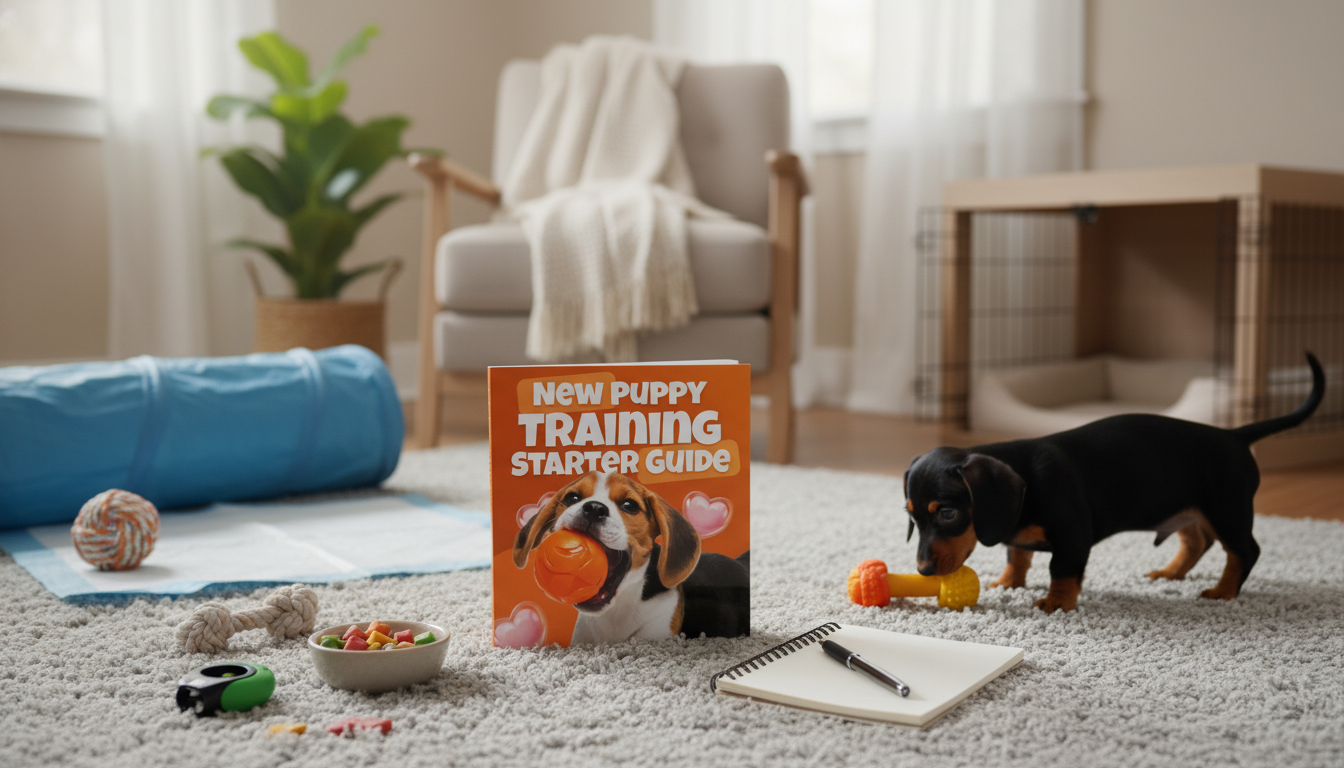
New Puppy Training Starter Guide: A 4-Week Routine for House-Training, Basic Commands, and Social Skills
A new puppy learns fastest with short, consistent sessions and a predictable daily rhythm. This starter guide lays out a simple 4-week routine for house-training, foundational cues, and early social experiences—plus practical checklists to reduce accidents, jumping, nipping, and overwhelm in the first month at home.
What to Set Up Before Training Starts
Before cues and schedules, set your puppy up to succeed with a few decisions you’ll stick with for the next month:
- Pick one potty spot outdoors and take your puppy there every time to build a clear pattern.
- Choose a confinement plan (crate, playpen, or puppy-proofed room) and use it for naps and accident prevention.
- Stock simple rewards: pea-sized soft treats, a tug toy, and a chew. Rotate items so they stay interesting.
- Decide house rules now (furniture access, feeding location, sleeping spot) so everyone is consistent.
- Schedule a vet check and ask about your local vaccine timeline before visiting high-traffic dog areas.
A Simple Daily Rhythm That Makes Training Easier
Most early training problems improve when the day becomes predictable. Use the same anchors on repeat: potty → play/training → food/water → potty → calm chew → nap.
- Plan 3–6 micro-sessions daily (1–3 minutes each) instead of one long session.
- Balance activity with rest—an overtired puppy is more bitey and less able to learn.
- For the first 7–10 days, track water, meals, naps, and potty times to spot patterns quickly.
Sample Day Schedule (Adjust to Age and Household)
| Time | What happens | Training focus |
|---|---|---|
| Morning wake | Potty trip, calm praise, short play | Reinforce potty outdoors; prevent indoor roaming |
| Breakfast | Meal in crate or station | Positive crate association; name recognition |
| After eating | Potty trip, 1–2 minutes training | Sit, touch/hand target, reward calm behavior |
| Mid-morning | Nap in crate/playpen | Settle skills; reduce nipping from fatigue |
| Lunch (if used) | Meal, short walk in safe area | Loose-leash basics indoors; engagement |
| Afternoon | Play, chew time, nap | Trade/drop games; handling practice |
| Evening | Dinner, potty, gentle social exposure | Calm greetings; confidence-building sights/sounds |
| Pre-bed | Final potty, quiet settle | Night routine consistency |
House-Training: Prevent, Predict, Reward
House-training improves fastest when accidents are prevented and outdoor bathroom trips are heavily rewarded. For potty timing, use a simple rule: go out after waking, after eating/drinking, after play, and every 30–90 minutes depending on age and how well things are going.
- Supervise to prevent accidents: leash your puppy to you indoors or use a pen when active.
- Reward fast: deliver a treat within 1–2 seconds of finishing outside (keep treats by the door).
- Use one potty cue (example: “Go potty”) and say it once as your puppy starts to eliminate.
- If an accident happens: interrupt gently, go outside immediately, then clean with an enzymatic cleaner. Skip punishment—it slows learning and can create hiding.
For additional house-training basics, see the American Kennel Club’s puppy potty training overview.
Week 1: Bonding, Crate Comfort, and the First Cues
Goal: help your puppy feel safe, build a repeatable routine, and start easy wins.
- Crate comfort: feed meals in the crate, toss treats in, and keep the door open at first so the crate predicts good things.
- Name response: say the name once → when your puppy looks at you → mark/reward. Repeat 5–10 reps.
- Teach “sit” and “touch”: quick, confidence-building cues that help with greetings and focus.
- Handling practice: brief touches to paws/ears/mouth paired with treats; stop before your puppy struggles.
Week 2: Bite Inhibition, Calm Greetings, and Leash Foundations
Nipping is normal puppy behavior. The skill you’re building is “teeth on skin ends the fun, calm behavior makes rewards happen.”
- Redirect to a toy, then reward gentle mouths and calmer play.
- Play a “trade” game: offer treat → puppy releases toy/chew → treat → return item. This helps prevent resource guarding habits.
- Add “down” and a brief “settle” on a mat by rewarding relaxed positions.
- Leash basics indoors: reward 3–5 loose-leash steps near you; end before your puppy gets frustrated.
- Calm greetings: ask for a sit, reward calm, and pause the interaction if jumping escalates.
Week 3: Social Skills and Confidence in the Real World
Socialization means positive, controlled exposure—not forcing interactions. The goal is a puppy who can notice new things and recover calmly.
For a science-backed approach to early exposure, review the AVSAB position statement on puppy socialization.
Week 4: Reliability, Short Absences, and Household Manners
Positive, reward-based methods tend to build clarity and confidence; the RSPCA’s guidance on reward-based training explains the approach well.
When Progress Stalls: Quick Fixes That Usually Work
Printable 4-Week Plan for Daily Checkoffs
If you want a ready-to-use routine with daily checkoffs, see: New Puppy Training Starter Guide (printable 4-week routine).
For families who like structured tracking pages, you can also add a simple worksheet system alongside your puppy log: Memory Boost Worksheets for Students & Adults.
FAQ
How often should a new puppy go outside for potty training?
Take your puppy out after waking, after eating or drinking, after play, and every 30–90 minutes depending on age and recent success. Supervise closely indoors, and reward immediately after your puppy finishes outside to speed up learning.
What basic commands should a puppy learn first?
Start with name response, sit, and touch/hand target for fast, repeatable wins at home. Next add come, leave it, and place/settle because they’re practical for safety, impulse control, and calmer household routines.
How do you socialize a puppy safely before all vaccines are finished?
Focus on controlled exposure: carry your puppy in busy areas, watch the world from a safe distance, and pair new sights and sounds with treats. Arrange meetups only with healthy, vaccinated dogs in clean, low-traffic settings, and ask your veterinarian what’s safest in your area.









Leave a comment