Toddler Nightmare Wake-Ups: What to Do Right Away
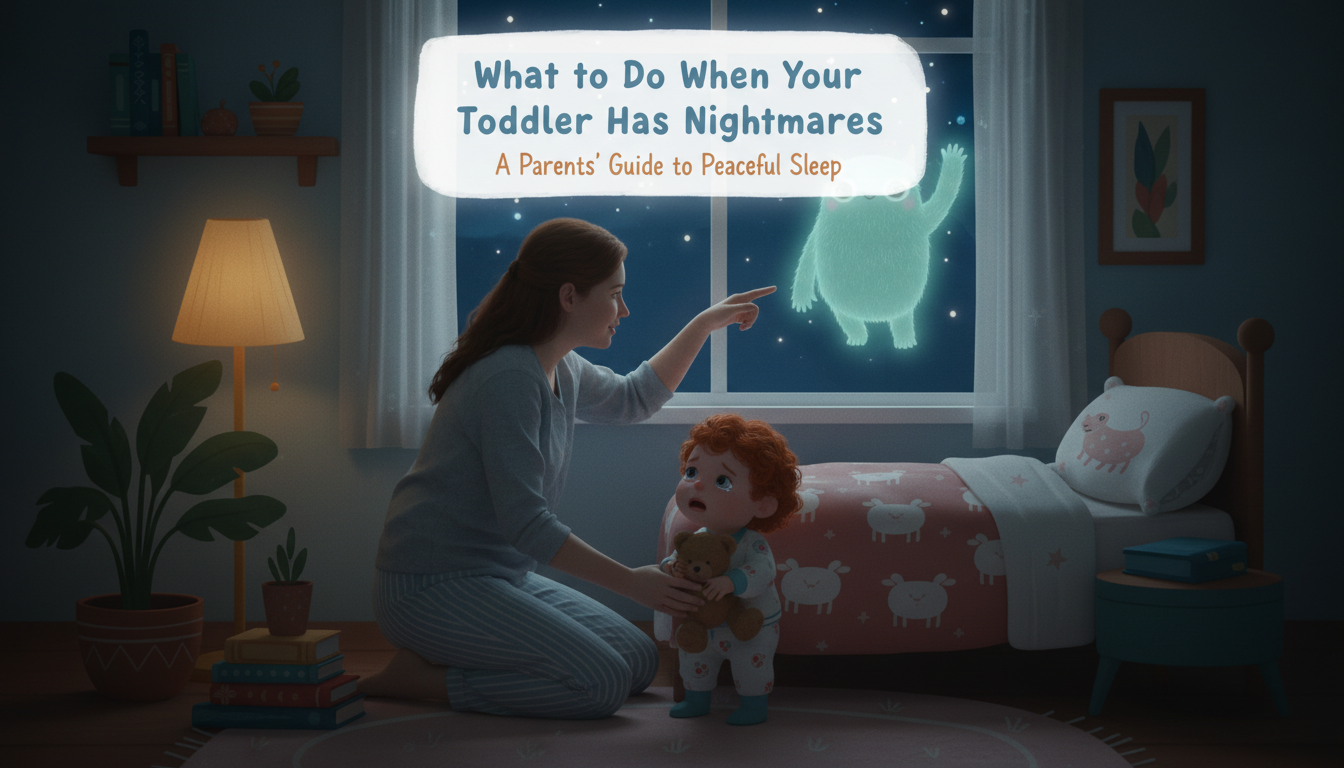
What should I do in the moment when my toddler wakes up from a nightmare?
Start by making the room feel safe and predictable. Keep your voice low, turn on a dim light or nightlight, and go to your toddler right away. Get down to their level and offer calm reassurance: “You’re safe. I’m right here. That was a scary dream.”
Next, help their body settle before trying to “fix” the dream. Try a simple sequence:
- Comfort first: Offer a hug, back rub, or hand-hold—whatever usually soothes them.
- Orient to reality: Gently name what’s real: “You’re in your bed. It’s nighttime. Mommy/Daddy is here.”
- Give a choice: Small choices restore control: “Do you want water or a cuddle?” “Do you want the door cracked or closed?”
- Check for basic needs: Quick diaper/potty, sip of water, adjust blanket, or room temperature.
If your toddler wants to talk, keep it brief. You can acknowledge the feeling without digging into details that might ramp them up: “That sounded really scary. It’s over now.” Avoid long explanations, screens, or bright lights—those can fully wake them and make it harder to fall back asleep.
To help them return to sleep, use a short, repeatable wind-down. Try slow breaths together (“Smell the flower, blow the candle”) or a quick grounding routine: “Let’s listen for quiet sounds… feel your blanket… hold my hand.” Then guide them back to their bed and stay close for a minute while they resettle. If they ask you to stay, set a gentle limit: “I’ll sit here for two minutes, then I’ll go back to my bed. I’ll check on you.”
For more comfort scripts and bedtime adjustments that can reduce repeat wake-ups, see the full guide here: https://amelin.shop/guide-toddler-nightmares-comfort-scripts-bedtime-fixes/.
FAQ
How can I tell the difference between a nightmare and a night terror?
Nightmares usually happen later in the night and your child wakes up scared and can be comforted. Night terrors often happen earlier, with crying or thrashing while still mostly asleep, and attempts to wake them can make it worse.











Leave a comment