Global Etiquette eBook: Travel Manners That Work Anywhere
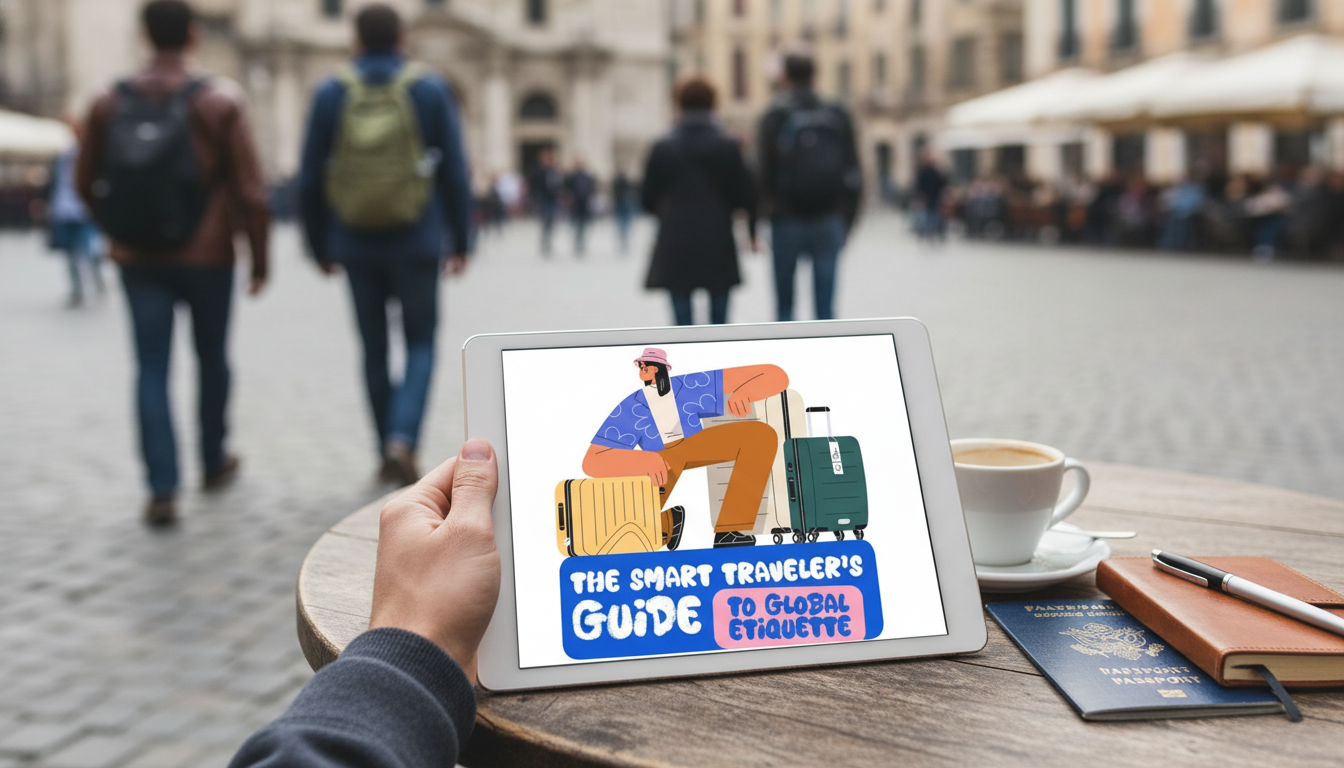
The Smart Traveler’s Guide to Global Etiquette: Cultural Tips and International Manners in a Digital eBook
Small etiquette missteps can turn friendly moments into awkward ones—especially when language, customs, and expectations change across borders. A few practical habits (how to greet, when to tip, what “polite” sounds like, and how to handle a mistake) often matter more than memorizing perfect phrases. The Smart Traveler’s Guide to Global Etiquette (digital download eBook) is built for real travel days: quick guidance on greetings, dining, tipping, personal space, dress, and everyday interactions—so the trip feels smoother from arrival to farewell.
Why etiquette matters more than perfect language
Knowing a few words helps, but etiquette is what makes those words land well. When vocabulary is limited, the nonverbal parts of communication do extra work.
- It signals respect quickly: tone, posture, timing, and attentiveness often communicate more than grammar.
- It reduces avoidable friction: hotels, restaurants, shops, transit, and tours run on unspoken rules—matching them prevents misunderstandings.
- It builds trust: hosts, colleagues, and new friends notice when someone makes an effort to meet local expectations.
- It keeps you calm when norms differ: queueing styles, service pace, negotiation, noise levels, and “personal bubble” can vary widely.
For destination-specific updates and practical arrival guidance, it’s also smart to check official travel resources like the U.S. Department of State Country Information and the UK Foreign travel advice.
Fast-start basics: the “arrival to first day” checklist
The first 24 hours are when etiquette slip-ups happen most—after a long flight, in unfamiliar systems, and while trying to be efficient. A simple checklist prevents the most common awkward moments.
- Greetings: learn the default for first meetings—handshake, bow, nod, or minimal touch. When unsure, keep it light and let the other person lead. Watch how long people hold eye contact.
- Names and titles: using a last name or honorific can be the respectful “safe mode” until invited to switch to first names.
- Personal space and volume: match conversational distance and voice level to the room. What feels “friendly” at home may feel loud or intense elsewhere.
- Dress signals: pack at least one outfit that can adapt quickly—covered shoulders/knees for religious sites, conservative neighborhoods, or formal venues.
- Photos and phones: default to asking before photographing people, market stalls, children, ceremonies, or sensitive sites. If it feels like a moment of life (not a “view”), ask first.
Dining, tipping, and hospitality customs that change the most
Meals create memorable connections—and also the most uncertainty. A few easy defaults help you navigate restaurant dining, home invitations, and group tours with confidence.
Quick etiquette fixes for common travel moments
| Situation | What can go wrong | Polite default |
|---|---|---|
| Meeting a guide or host | Over-familiar greeting or overly casual address | Use a neutral greeting, smile, and a respectful title until invited otherwise |
| Restaurant service pace | Assuming slow service is poor service | Match the local rhythm; ask for the check politely if needed |
| Tipping | Offending by over-tipping or not tipping | Check local norms; if uncertain, ask the hotel desk or look for service charges |
| Religious or historic sites | Inappropriate clothing or photos | Cover shoulders/knees when unsure; ask before photographing people or rituals |
| Bargaining | Haggling where prices are fixed or being too aggressive | Start friendly, keep it light, and accept “no” gracefully |
Work trips and formal situations: meetings, gifts, and business cards
Handling mistakes gracefully without making it worse
Many travelers also like having a values-based compass for respectful travel. The UNWTO Global Code of Ethics for Tourism is a helpful reference point for courtesy, cultural respect, and responsible behavior.
What the digital download includes and how to use it on the go
The Smart Traveler’s Guide to Global Etiquette (digital download eBook) is designed for quick reference before meals, tours, meetings, and public-transport days. Instead of long theory, it organizes etiquette into practical categories—greetings, dining, dress, tipping, and communication—so you can check a section in minutes and move on with your day.
To remember key customs under pressure (jet lag, busy itineraries, rapid conversations), some travelers like a simple practice tool. Memory Boost Worksheets for Students & Adults (printable digital download) can help reinforce new habits—like when to ask before photos, how to accept hospitality, or what “polite default” you want to use when you’re unsure.
Get the guide
For fewer awkward moments and more meaningful interactions, keep a copy of The Smart Traveler’s Guide to Global Etiquette on your phone, tablet, or laptop. A quick check before everyday situations—greetings, dining, tipping, dress codes, and workplace meetings—can change how smoothly the entire day goes.
FAQ
Is this eBook useful if only one country is being visited?
Yes. Core etiquette patterns—greetings, dining behavior, personal space, and tipping expectations—apply in any destination, and the guide makes it easy to build a short pre-trip checklist tailored to one itinerary.
Does it cover tipping and dining etiquette?
Yes. It includes guidance for restaurants, home meals, and tour situations, plus reminders to confirm whether service charges are included and what local norms are upon arrival.
How is the digital download delivered and used while traveling?
After purchase, it’s available as a digital download you can save to your preferred device for quick lookups between activities. Keeping a local copy on your phone or tablet makes it convenient when you want to review etiquette on the move.











Leave a comment