Study Skills Mastery: Focus, Memory & Weekly System
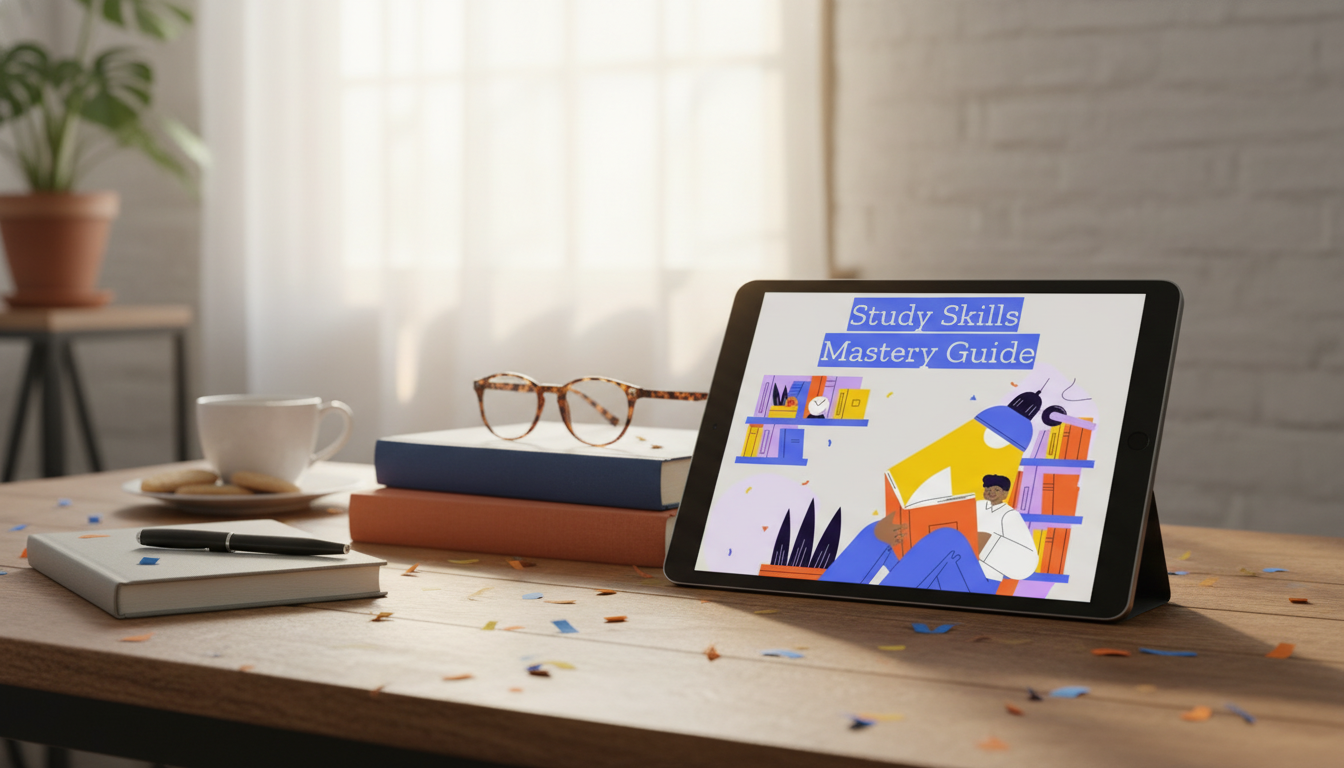
Study Skills Mastery Guide: Build Focus, Memory, and a Repeatable Study System
Strong study results come from a system: clear goals, focused sessions, active recall, smart review timing, and a simple way to track progress. This guide breaks study into repeatable steps—so daily work feels lighter, retention improves, and exam weeks become more predictable.
What “mastery” looks like in day-to-day studying
Study “mastery” isn’t about grinding longer hours. It’s about building a process that keeps working even when energy, motivation, or schedules fluctuate.
- Consistent output: short, high-quality sessions beat long, draining marathons—especially when you can repeat them day after day.
- Retention over rereading: retrieving information from memory is the core skill. If you can’t recall it, you don’t “own” it yet.
- Feedback loops: quizzes, error logs, and review schedules replace guessing and make improvement measurable.
- Environment design: focus is treated as something built (with routines and constraints), not something hoped for.
Set up a weekly study plan that doesn’t collapse
A plan fails when it’s too detailed to maintain or too vague to guide action. The goal is a structure that survives a busy week.
- Start with the constraint: write down available hours, deadlines, and the hardest subjects first.
- Translate goals into actions: “complete 3 recall rounds + 1 timed set” is clearer than “study chapter 4.”
- Use a two-layer plan: a weekly map plus a daily top-3 list keeps priorities stable without micromanaging.
- Include review time as fixed: schedule it like class or practice—no negotiation.
- Keep one buffer block: a built-in catch-up slot prevents one slip from derailing the whole week.
Weekly plan template (example you can copy)
| Day | Deep Work (45–90 min) | Review (15–30 min) | Admin (10–15 min) |
|---|---|---|---|
| Mon | New material + notes-to-questions | Recall quiz on last week | Plan tomorrow + update checklist |
| Tue | Problem set / practice questions | Error log review | Organize files / due dates |
| Wed | New material + concept map | Flashcards (spaced) | Prep resources |
| Thu | Timed practice | Target weak topics | Schedule next review |
| Fri | Mixed practice (interleaving) | Mini mock test | Reflect + adjust |
| Sat | Catch-up buffer or project work | Light recall | Reset workspace |
| Sun | Rest or brief planning | Optional gentle review | Set weekly priorities |
Focus that lasts: a simple protocol for distraction-proof sessions
Focus improves faster when each session has a predictable beginning, middle, and end. That reduces the friction of “starting,” which is often the hardest part.
- Define the session outcome in one sentence: what must be true when time is up?
- Use a short start ritual: water, clear desk, open only needed tabs, set a timer.
- Work in cycles: 25/5 or 50/10 are reliable defaults; stop on time to protect consistency.
- Use a distraction capture list: park thoughts (“email advisor,” “buy lab notebook”) instead of following them.
- End with a 2-minute wrap: write the next step, file materials, and schedule the next review.
Study methods that actually move grades
Some techniques feel productive but don’t create durable learning. The most reliable methods share one theme: they force the brain to retrieve, decide, and correct.
- Active recall: turn notes into questions; answer without looking, then check and fix gaps. This is strongly supported by learning research, including work on retrieval practice.
- Spaced repetition: revisit topics on a schedule to prevent forgetting (the spacing effect is well documented).
- Interleaving: mix problem types so you practice choosing the right method—not just repeating one pattern.
- Elaboration: explain “why” and “how” in plain language; teach it back to an imaginary classmate.
- Dual coding (carefully): pair brief visuals with explanations for complex processes (avoid drawing for drawing’s sake).
- Practice under test conditions: timed sets, closed-book, and realistic formats reduce exam-day surprises.
For deeper evidence on what works, see Dunlosky et al. (2013) on effective learning techniques, Cepeda et al. (2006) on distributed practice, and Karpicke & Blunt (2011) on retrieval practice.
Memory techniques for fast recall (without gimmicks)
Memory improves most when you organize information, create strong cues, and review at the right times—rather than trying to “cram harder.”
- Chunking: group information into meaningful units (rules, patterns, categories) so recall has fewer moving parts.
- Mnemonic hooks when needed: acronyms, loci, or story chains are great for lists, sequences, and exceptions.
- Retrieval cues: build prompts that resemble exam cues—definition stems, diagrams with missing labels, or “what happens next?” steps.
- Error-first reviews: spend more time on what you missed and less on what’s easy; your error log becomes the syllabus.
- Sleep and spacing: earlier reviews beat later ones because consolidation is stronger when reminders arrive before you’ve fully forgotten.
A quick study checklist for any subject
When time is short, a checklist prevents drifting into low-yield habits. It also makes “minimum viable studying” possible on rough days.
Using a digital guide to keep everything consistent
If you want a structured, ready-to-use framework, see the Study Skills Mastery Guide (digital study guide + checklist PDF). For planning workflows that pair well with a weekly study map (especially for creators and students balancing projects), the AI Prompts for Content Calendars can help you outline repeatable schedules and reduce “blank page” planning time.
FAQ
How long should a study session be for the best focus?
Use 25–50 minute focus blocks with short breaks, then stop on time. Adjust up or down based on the subject and your stamina, and schedule the next session so progress stays consistent.
What’s the fastest way to remember material for exams?
Combine active recall with spaced repetition, then add timed practice and an error log. Rereading feels productive, but recall-based practice more reliably builds durable memory and exam-ready retrieval.
How can a study checklist help if motivation is low?
A checklist reduces choices and makes it easier to start with a minimum viable session. Small, clear steps create momentum and leave you with an obvious next action instead of an open-ended task.











Leave a comment