Stronger Together: Printable & Digital Family Time Plan
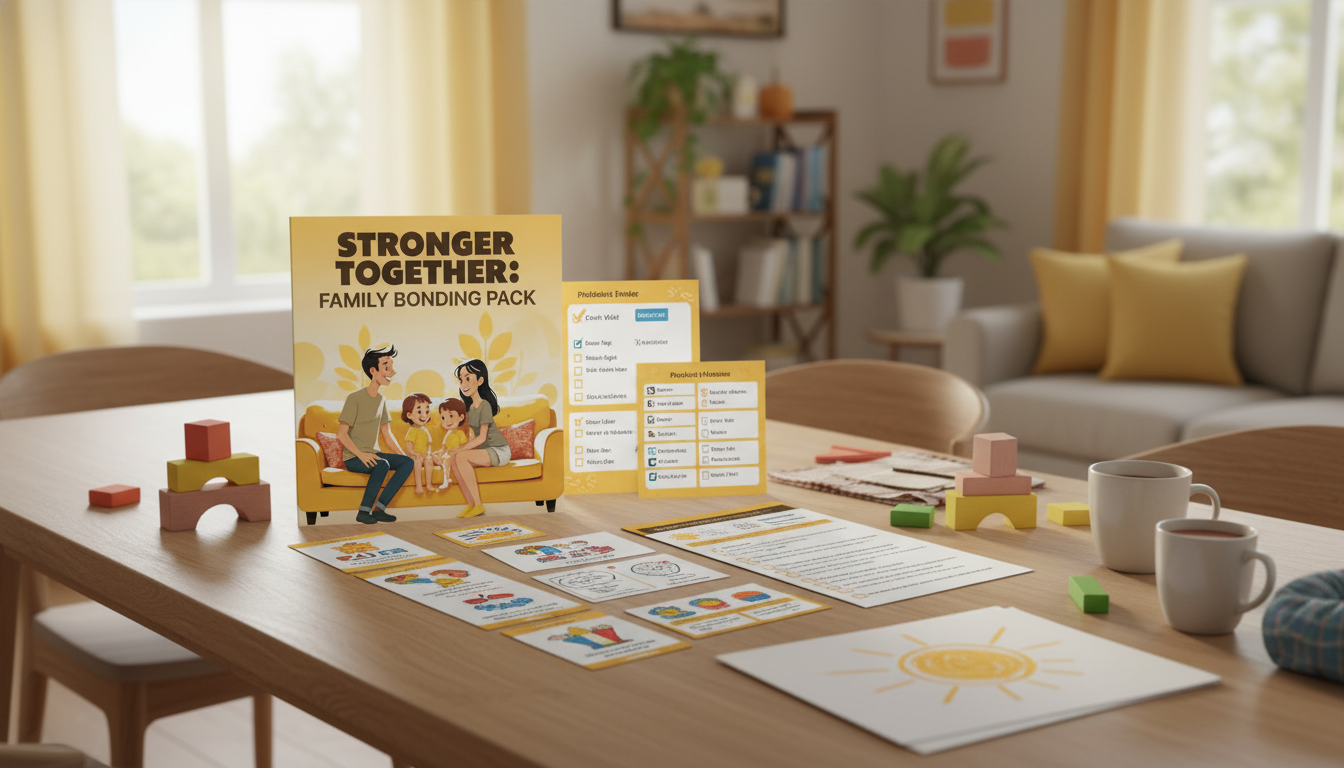
Stronger Together: A Simple Plan for Meaningful Family Time (Printable & Digital)
Busy schedules, screens, and scattered routines can make connection feel like one more thing to manage. A structured set of printable and digital activities makes it easier to turn small moments into steady habits—at home or outdoors—without needing elaborate prep. With the right prompts and a gentle checklist, family time stops depending on everyone’s “perfect mood” and starts feeling doable on ordinary days.
What the Stronger Together Family Bonding Pack Is
The Stronger Together: Family Bonding Pack is a digital family activities guide built for kids and parents to use together—without needing a big plan or a long setup. It combines an eBook-style structure with printable pages so you can choose what fits your household and repeat what works.
- Digital guidance that helps you turn one-off ideas into repeatable family rituals
- Printable options for quick setup at home, plus activities that work outside for fresh-air connection
- A family time checklist format that supports consistency without rigid rules
- Practical pacing for weeknights, weekends, co-parenting transitions, and school breaks
Who It Helps Most (and Why It Works)
Some families don’t need more motivation—they need fewer steps between “We should do something together” and actually doing it. This kind of pack works because it reduces decision fatigue and gives kids clear, friendly choices that feel predictable (in a good way).
- Families who want more connection but feel short on time, energy, or ideas
- Parents who want low-prep activities that don’t require scrolling for inspiration
- Kids who respond well to clear options, simple roles, and playful structure
- Households balancing multiple ages by rotating adaptable prompts
- Caregivers who want a calmer alternative to defaulting to screens
Research-backed parenting concepts often point to the value of consistent, responsive interaction—small “back-and-forth” moments that build trust over time. For a deeper look at why these everyday interactions matter, see Harvard’s overview of serve and return and the CDC’s positive parenting tips.
How to Use the Pack Without Overhauling Your Schedule
The easiest way to make family time stick is to make it smaller than your ambition. Think: short, repeatable, and tied to something that already happens.
- Start with a “10-minute win.” Pick one short activity so everyone feels success quickly.
- Choose a consistent cue. After dinner, before bedtime, or Saturday morning beats chasing the “ideal time.”
- Print a small set and keep it visible. A fridge clip, binder, or clipboard removes friction.
- Let kids choose from a short list. Two or three options increases buy-in and reduces power struggles.
- Use the checklist gently. Aim for progress, not perfection—consistency grows faster when it feels low-pressure.
At-Home Connection Ideas That Don’t Feel Like Homework
At-home bonding works best when it doesn’t feel like a lesson. Instead of “Tell me about your day,” you’re offering playful prompts and small cooperative moments that fit real life.
- Conversation prompts that explore feelings, favorites, and shared memories
- Quick cooperative challenges (build, sort, plan, or create together) that encourage teamwork
- Calm-down and reset moments for reconnecting after a tough day
- Micro-rituals like gratitude rounds, family compliments, or “one good thing” sharing
- Screen-free alternatives that still feel modern (timed challenges, scavenger prompts, creativity bursts)
Fast picks for different kinds of days
| Situation | Goal | Best activity style |
|---|---|---|
| Everyone is tired | Reconnect without effort | 10-minute conversation prompts + cozy ritual |
| Kids are restless | Burn energy together | Indoor movement challenge or mini scavenger hunt |
| Tension after school/work | Reset mood | Short calming activity + one-to-one check-in |
| Rainy weekend | Create shared memories | Creative project or themed family game night |
| Limited time before bed | End on closeness | Checklist mini-ritual + reflection question |
Outdoor Connection Activities for Better Moods and Better Talk
Outdoor time can lower the emotional “volume” in a household—especially when kids (and adults) have been indoors all day. Side-by-side conversation during a walk often feels easier than face-to-face talks at the table, and simple nature prompts turn “nothing to do” into shared discovery.
- Nature-based prompts that spark curiosity (spotting, listening, noticing patterns)
- Walk-and-talk ideas for kids who open up while moving
- Low-cost challenges like observation games, photo quests, or neighborhood kindness missions
- Seasonal switches that keep the same structure but change the theme
- Multi-age roles (leader, timer, photographer, collector, storyteller) so everyone contributes
If your family is navigating stress or big transitions, steady routines and supportive connection are also linked with resilience-building. The APA’s guide on building resilience in children and teens offers helpful context for why these small habits matter.
A Weekly Family Bonding Rhythm (Flexible, Not Fragile)
Consistency doesn’t require a packed calendar. A simple rhythm keeps things predictable while still leaving space for sports, homework, work shifts, and unexpected evenings.
What’s Included and What to Expect
More digital guides you may like
- Memory Boost Worksheets for Students & Adults | Printable Digital Download
- Top 50 Side Hustles That Actually Pay | Digital Download PDF eBook
- Enrichment Ideas for Indoor Cats | Printable Cat Enrichment Guide
FAQ
What ages is this family bonding pack best for?
It’s designed for kids and parents to use together, and many activities can be adapted up or down by changing the time limit, simplifying the prompt, or assigning age-appropriate roles (like “timer” for younger kids and “host” for older siblings).
Do the activities require special supplies?
No—most options are low-prep and use common household items, plus outdoor activities that focus on observation, conversation, and simple challenges rather than equipment.
How much time should a family set aside to see benefits?
Starting with 10–15 minutes a few times per week is enough to build momentum. The checklist helps you stay consistent, and longer weekend sessions can be added when your schedule allows.












Leave a comment