Indoor Cat Enrichment: DIY Toys, Routines & Home Tips
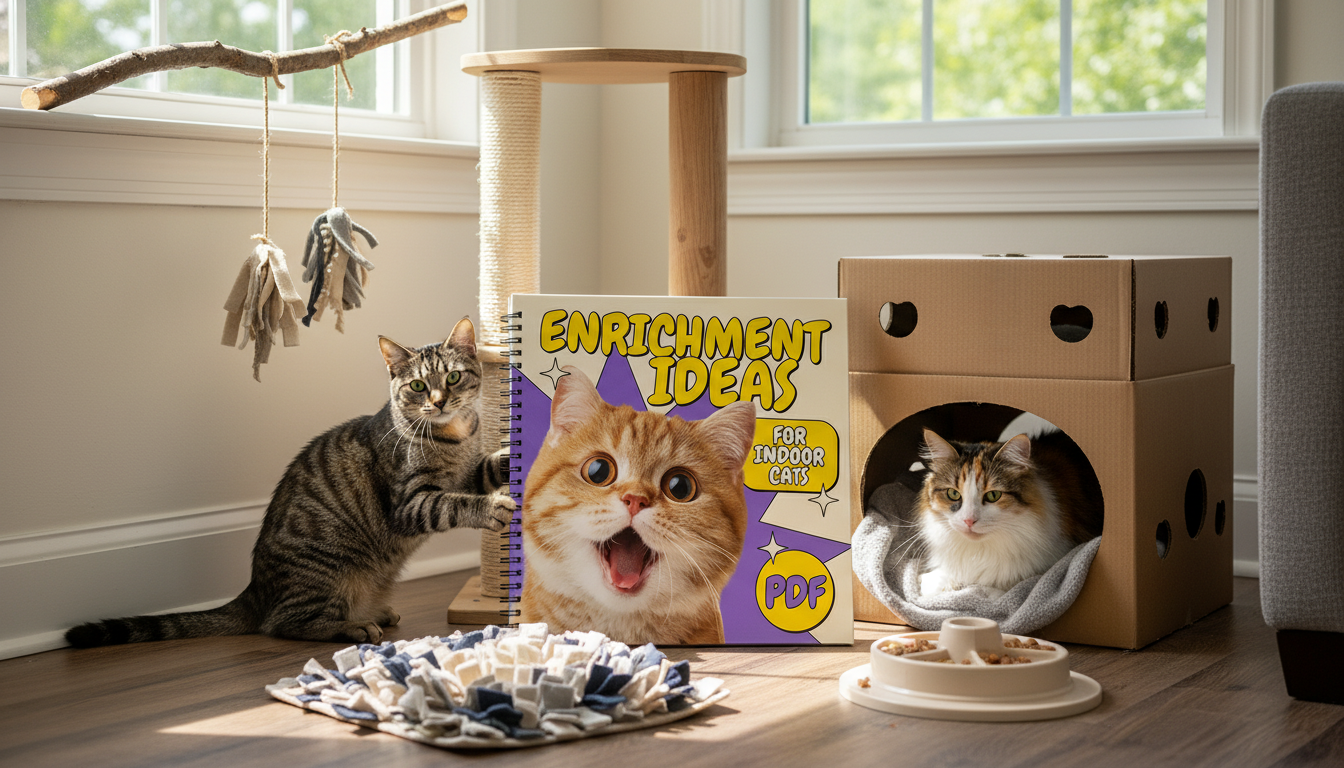
Enrichment Ideas for Indoor Cats: DIY Toys, Play Routines, and Cat-Friendly Home Tips
Indoor cats can live wonderfully full lives when their days include hunting-style play, problem-solving, climbing, scratching, and safe novelty. The goal isn’t nonstop entertainment—it’s a predictable rhythm of short activities that let your cat practice natural behaviors and then truly relax. Below are practical enrichment ideas organized into simple routines and home upgrades, plus planning tools to keep things consistent without feeling overwhelming.
Start With Needs: Hunt, Climb, Scratch, Hide, Observe
When enrichment “isn’t working,” it’s often because the activity doesn’t match the behavior your cat is trying to express. Build a small menu that hits these five needs, then rotate options to keep life interesting.
- Hunting: short bursts of chase-and-catch play that end with a “capture” moment (toy grabbed, treat reward, or a meal).
- Climbing: vertical routes (cat tree, shelves, window perch) that allow up/down movement and multiple resting heights.
- Scratching: at least one tall vertical scratcher and one horizontal option in different rooms to support stretching and marking.
- Hiding: cozy covered beds, boxes, and “safe zones” to reduce stress and allow decompression.
- Observing: window perches, bird feeders outside (where safe/allowed), or indoor “cat TV” rotations (feathers, bubbles, slow-moving toys).
Enrichment checklist by behavior
| Behavior | Simple setup | Quick win (5 minutes) |
|---|---|---|
| Hunting | Wand toy + small treats | Two 90-second chases, then treat |
| Climbing | Perch or cat tree near a window | Move a toy up/down levels for 2 minutes |
| Scratching | Tall post + cardboard pad | Sprinkle catnip on scratcher, praise use |
| Hiding | Box with towel, covered bed | Hide 3 treats in/near the hide spot |
| Observing | Window seat, rotating view | Place perch, open blinds for 10 minutes |
For deeper guidance on environmental and behavior needs, see the American Association of Feline Practitioners (AAFP) Feline Behavior Guidelines and International Cat Care.
A Simple Daily Play Routine That Fits Real Life
Many cats prefer frequent “micro-hunts” rather than one long workout. Aim for 2–3 short sessions (3–10 minutes each). If your schedule is tight, two focused sessions—morning and evening—can still make a big difference.
- Use a consistent pattern: stalk → chase → pounce → capture → cool-down. End with a small snack or part of a meal so the “hunt” feels complete.
- Rotate toys to protect novelty: keep 3–5 toys out and store the rest. Swap weekly so “old” toys feel new again.
- Match intensity to the cat: kittens often need more frequent, higher-energy play; seniors do better with slower movement, low jumps, and more sniffing/puzzle work.
- Use environmental cues: play before meals, before bedtime, or right after work to reduce zoomies and night waking.
Tip: If your cat grabs hands or ankles, increase wand-toy play and aim the “prey” away from your body. Reward calm behavior right after play with a treat toss or lickable snack.
DIY Toys and Low-Cost Enrichment You Can Make Today
DIY enrichment works best when it’s simple, supervised, and easy to replace. Skip anything with loose string, small beads, or breakable parts that could be swallowed.
- Paper “prey” strips: twist paper into a thin strip and drag it like a bug; supervise to prevent ingestion.
- Box maze: connect boxes with cut “doorways,” add crinkle paper, and hide a few treats for foraging.
- Sock kicker (no loose strings): fill a clean sock with fabric scraps, tie off securely, and offer for bunny-kicking.
- Toilet paper roll puzzle: fold ends inward, cut small holes, add a few treats, and let the cat bat it around.
- Sniff stations: place a pinch of catnip/silvervine (if tolerated) on a mat, rotate scents, and remove after short sessions.
If your cat gets overstimulated (hard tail thumps, ears pinned, sudden swats), shorten sessions and switch to slower “injured prey” motions close to the ground.
Food Enrichment: Turn Meals Into a Daily Project
Food enrichment is often the easiest win for indoor cats because it taps into seeking, sniffing, and problem-solving. It can also help cats who “don’t like toys” engage in a more natural daily challenge.
For additional enrichment ideas and safety pointers, the ASPCA’s cat care resources are a helpful reference.
Make the Home Cat-Friendly Without Major Renovations
Rotate Enrichment Weekly to Prevent Boredom
Printable Planning Tools for Consistency
If you want a ready-to-use system, Printable Cat Enrichment Guide with DIY toys and play routines includes planning pages and routines you can repeat. For households that travel (or are preparing for emergencies), the Pet Travel Essentials Checklist for safe trips with cats helps organize carriers, calming items, and day-of essentials.
FAQ
How much play does an indoor cat need each day?
Most indoor cats do well with 2–3 short play sessions (about 3–10 minutes each), especially when you end with a small snack or part of a meal. If your cat has frequent zoomies, wakes you at night, or pesters constantly, add a session; if they walk away or seem cranky, shorten and slow the play.
What are the best enrichment ideas for a bored indoor cat that doesn’t like toys?
Try food puzzles, scatter feeding, lick mats, and “hunt the bowl” stations—many cats engage more readily with sniffing and foraging than with toys. You can also use low-motion prey play (tiny wiggles behind furniture) and short training sessions with treats, introducing new activities gradually.
Are puzzle feeders safe for cats?
Yes, when you start with easy designs, supervise the first few uses, and clean them regularly. Avoid feeders with small breakable parts, and stop if your cat becomes frustrated, obsessive, or starts guarding the feeder from other pets.












Leave a comment