Heal Financial Trauma: Calm Money Habits That Stick

Healing from Financial Trauma: A Comprehensive Guide to Rebuilding Your Financial Wellness
Financial trauma can show up as avoidance, panic, shame, or compulsive spending—even when income is stable. Rebuilding financial wellness is possible with a blend of emotional safety, practical systems, and gradual exposure to money decisions that feel manageable.
What financial trauma can look like in daily life
Financial trauma often hides in plain sight. It can look like fear of opening bills, dread around bank apps, guilt after purchases, or feeling strangely numb when money comes up in conversation. Many people bounce between extremes: avoiding money entirely or trying to control it with relentless tracking and self-criticism.
Patterns can include avoidance (ignoring accounts), hyper-control (checking balances repeatedly), scarcity-driven choices (stockpiling, over-saving, under-spending on needs), or financial self-sabotage (missing payments despite having funds, or “blowing it” after progress). The body can get involved too—racing heart, irritability, shutdown, shame spirals, or recurring conflict with a partner about spending.
One reason this persists is nervous-system conditioning: money tasks can feel like threat because they were paired with real danger in the past (instability, eviction risk, coercion, secrecy, or chronic conflict), even if today’s situation is safer.
Signals and supportive first responses
| Signal | What it might mean | A helpful first step |
|---|---|---|
| Avoiding account logins | Money feels unsafe or overwhelming | Set a 3-minute timer to check balances only; stop when the timer ends |
| Impulse spending after stress | Spending is being used to regulate emotions | Create a 24-hour pause list for non-essentials and add soothing alternatives |
| Freezing during bill payment | Task triggers threat response | Pay one small bill first, then take a break; build tolerance gradually |
| Arguments about money | Safety and control needs are clashing | Use a structured money meeting with a set agenda and time limit |
Create a sense of safety before changing the numbers
Before tackling budgets, debt plans, or big financial decisions, reduce the “threat level” around money tasks. Pick a calm time of day, cut distractions, and keep sessions brief. A shorter session that ends before overwhelm does more to rebuild trust than a long session that ends in panic.
It also helps to name the trigger. Debt letters, account notifications, certain stores, and family conversations can activate old memories quickly. When you can label what’s happening (“This is a trigger, not an emergency”), the intensity often drops enough to keep going.
Try grounding techniques before opening financial apps: slow breathing (longer exhale than inhale), a 5-4-3-2-1 sensory scan, or a short walk. If financial news ramps up fear or scarcity, set boundaries with information intake. You can stay informed without doomscrolling yourself into paralysis.
For additional practical steps around financial stress and coping, the Consumer Financial Protection Bureau (CFPB) offers accessible guidance that supports calmer decision-making.
Stabilize the basics: a gentle financial foundation
Stability is the platform for healing. Start with a “minimum viable budget”—just the essentials: housing, food, utilities, transportation, medications, plus one small “joy” category. That last category matters because deprivation can intensify rebound spending and shame.
Automate what can be automated to reduce decision fatigue: minimum debt payments, savings transfers (even small), and recurring bills. Automation turns “I have to remember and choose” into “the system supports me,” which is especially helpful when anxiety spikes.
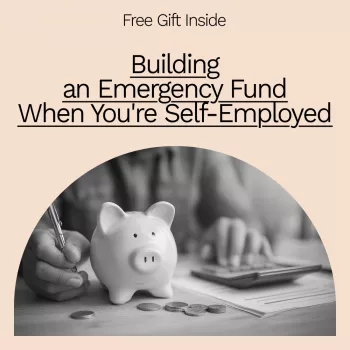
If cash flow is tight, consider building a small buffer first—often $250–$1,000—before pushing aggressive payoff targets. A starter fund can prevent one surprise expense from sending you back into crisis mode. Replace perfection with consistency: a simple plan followed most weeks beats an elaborate plan abandoned after one hard month.
If structured guidance helps you stay steady without overthinking, consider Healing from Financial Trauma: A Comprehensive Guide to Rebuilding Your Financial Wellness, designed to pair emotional safety with practical steps.
Rebuild trust with money through micro-actions
If you’re building routines across life and work and want help generating simple planning systems, AI Prompts for Content Calendars | Digital Download eBook, Social Media Content Planner Prompts, AI Marketing Guide for Creators & Entrepreneurs can be a useful companion for reducing decision overload—especially when structure helps you feel safer.
Address debt and money stress without shame
For broader financial education and tools, the National Endowment for Financial Education (NEFE) offers reputable learning resources that can support steady skill-building without shaming language.
Supportive conversations and professional help
Trauma-informed support can speed up progress and reduce isolation: therapy (including financial therapy), coaching, or nonprofit credit counseling. If stress feels unmanageable or you’re experiencing intense distress, SAMHSA’s coping guidance can be a helpful starting point for emotional regulation tools: SAMHSA — Coping with stress.
A guided resource for rebuilding financial wellness
Explore the guided option here: Healing from Financial Trauma: A Comprehensive Guide to Rebuilding Your Financial Wellness.
FAQ
How long does it take to heal from financial trauma?
Timelines vary, but progress often moves through phases: stabilization (reducing panic and avoidance), skill-building (simple systems and routines), and deeper repair (changing long-held beliefs and triggers). Small milestones—like checking an account without spiraling or paying bills on time for a month—are meaningful signs of healing.
Why do money tasks cause panic even when finances are improving?
The nervous system can stay conditioned to treat money tasks as a threat because of past experiences, even when today’s numbers look better. Grounding, automation, and graded exposure (small steps that end before overwhelm) can retrain that response over time.
What is one small step to start rebuilding financial wellness today?
Set a 3-minute timer and check your balances only—then stop when the timer ends, even if you feel like you “should” do more. Keeping the task contained builds trust and reduces the chance of an avoidance rebound.











Leave a comment