5-Minute Audio Reset for Exhausted Parents (3-in-1)
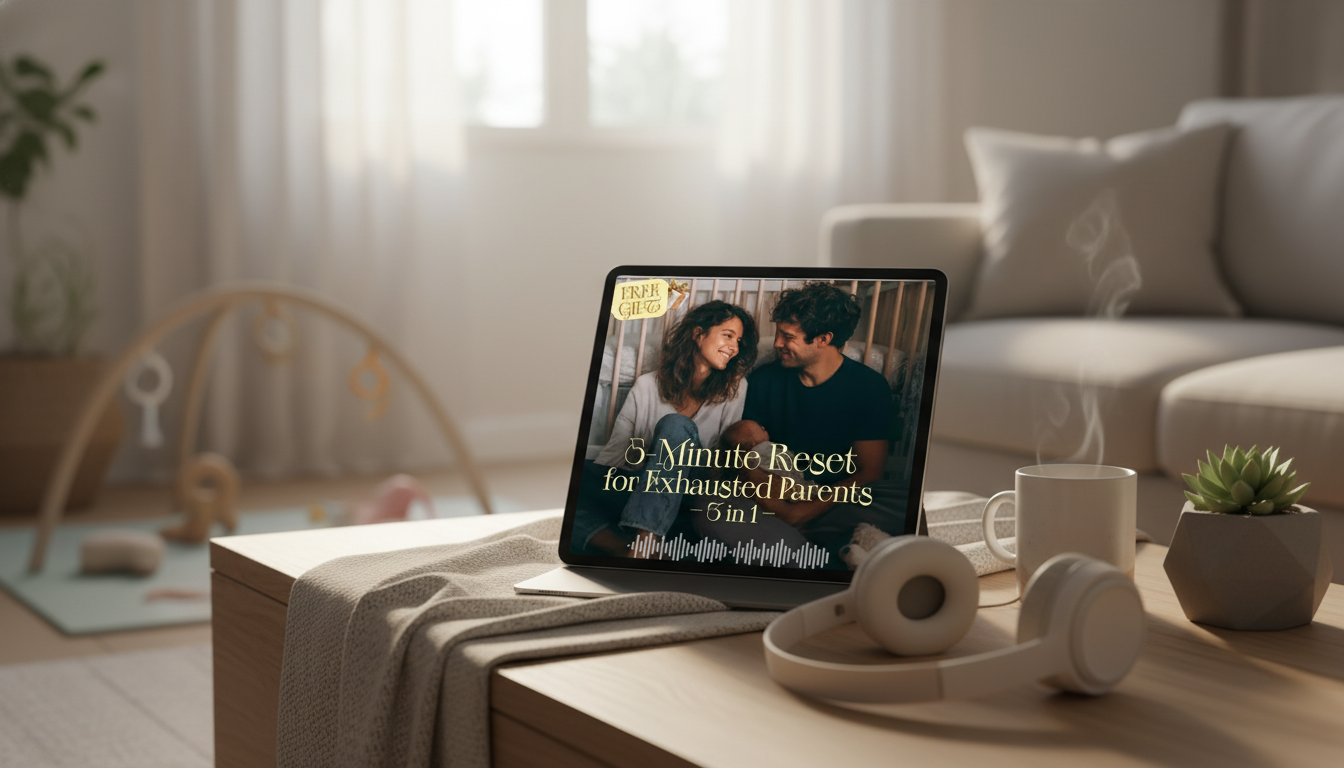
5-Minute Reset for Exhausted Parents: Calm, Clarity, and Energy—Right in the Middle of Real Life
Parenting rarely comes with long breaks, but it does come with tiny pockets of time: before pickup, after a meltdown, between meetings, or right after bedtime. A short, audio-guided reset can help your body step out of stress mode, steady big emotions, and bring back usable energy—without needing silence, a yoga mat, or a full meditation session.
When everything feels loud and fast, pressing play on a simple routine can act like a “bridge” between moments, so you don’t carry the last hard thing straight into the next interaction.
Why parents feel drained so quickly (and why a short reset helps)
Parent fatigue isn’t only about physical tasks. It’s the constant switching, listening, negotiating, and anticipating—often while you’re already running low.
- High-frequency interruptions keep your nervous system on alert, making it hard to recover even when the day slows down.
- Emotional labor (soothing, explaining, staying patient, tracking everyone’s needs) adds a quieter layer of exhaustion.
- Short guided practices can create a quick downshift, lowering the odds that tension spills into the next moment.
- Breath-led routines are portable: sitting in the car, standing in the kitchen, or lying in bed still counts.
For a science-grounded overview of mindfulness and stress regulation, the American Psychological Association and the NCCIH (NIH) both summarize research, effectiveness, and safety considerations.
What the 3-in-1 audio reset includes
A well-designed 5-minute reset doesn’t just slow you down—it helps you come out the other side ready to continue the day with more steadiness.
- Mindfulness breathing: guided pacing to soften tension and interrupt the stress spiral.
- Emotional reset: quick cues to name what’s happening internally and regain a sense of choice before reacting.
- Energy boost: a brief, grounding re-activation so you don’t end the reset feeling sleepy or flat.
- Built for repeat use: helpful when the same stressors happen multiple times a day (mornings, dinner, bedtime, work transitions).
Three parts of a 5-minute reset
| Part | Goal | Best time to use | What it can feel like afterward |
|---|---|---|---|
| Mindfulness breathing | Settle the body and steady attention | Right after an interruption or rush | Slower pulse, less tightness in chest/shoulders |
| Emotional reset | Reduce reactivity and self-criticism | After a conflict, whining loop, or overwhelm | More patience, less “on edge” feeling |
| Energy boost | Regain momentum without caffeine | Mid-afternoon slump or pre-evening routine | Clearer head, lighter fatigue |
A practical way to use the reset (even on chaotic days)
Consistency is less about willpower and more about making the reset easy to start. The simplest approach: attach it to a moment that already happens.
- Pick one reliable trigger: after school drop-off, before opening your laptop, after pickup, or right after bedtime.
- Keep expectations small: the goal isn’t perfect calm; it’s a measurable shift from “spinning” to “steady enough.”
- Use headphones only when helpful; a low-volume speaker works when hands are busy (packing lunches, folding laundry).
- Pair it with one tiny action afterward: drink water, step outside for 30 seconds, or write the next task. This helps the calmer state “stick.”
- If interrupted, resume when you can; even 60–90 seconds is still a reset, not a failure.
How mindfulness breathing creates a fast shift
Tip for busy parents: for 2–3 breaths, place one hand on your chest and one on your belly. Notice where tension is holding, then allow the exhale to be a little longer than the inhale. If you want a structured breathing method, Cleveland Clinic’s overview of controlled breathing (including box breathing) is a practical reference: Box breathing and controlled breathing for stress.
Emotional reset: from snapping to responding
Energy boost without overstimulation
What to expect after a week of consistent use
A quick comparison of common “reset” options
Common ways parents try to reset
| Option | Time needed | Upside | Downside |
|---|---|---|---|
| 5-minute guided audio reset | 5 minutes | Structured, repeatable, no setup | Requires pressing play and protecting a small window |
| Scrolling social media | 5–30+ minutes | Easy escape | Often increases stress, comparison, and time loss |
| Extra caffeine/sugar | 1–5 minutes | Quick lift | Crash, jitteriness, sleep disruption for some |
| Workout or walk | 15–60 minutes | High benefit for mood and energy | Hard to fit into packed days |
When to avoid or modify breath-based practices
Audio tools and downloads that support busy-parent momentum
- 5-Minute Reset for Exhausted Parents (3 in 1) | Audio Course | Mindfulness Breathing, Emotional Reset & Energy Boost (portable, repeatable, designed for transitions)
- Memory Boost Worksheets for Students & Adults | Printable Digital Download | Brain Training eBook, Memory Techniques, Study & Recall Tools (helpful for scattered focus and “where did I put that?” days)
- Top 50 Side Hustles That Actually Pay | Digital Download PDF eBook | Side Hustle Ideas That Make Money | Gig Economy & Passive Income (for parents who want structured ideas without endless searching)
FAQ
How often can a 5-minute reset be used in a day?
It can be used 1–4+ times a day, especially at predictable transitions like drop-off, before work, after pickup, or before bedtime. Keep it sustainable by listening to your body and aiming for “often enough” rather than perfect consistency.
Can this be used when there’s no quiet time or privacy?
Yes—use one earbud, play it at low volume, or run it on a small speaker while doing simple chores. Even a partial reset (60–90 seconds) can still take the edge off and help you re-enter the moment more steadily.
Is a short audio reset a substitute for therapy or sleep?
No. A short reset supports self-regulation and stress recovery, but it doesn’t replace mental health care or adequate rest. It can be a helpful complement alongside better sleep habits, medical care, or therapy when needed.












Leave a comment