Holistic Wellness Reset: 30-Day Beginner Plan
Holistic wellness works best when it’s practical: a few supportive habits across nutrition, movement, mental health, and self-care—done consistently. A beginner-friendly reset is less about “doing everything” and more about building a steady foundation that fits real schedules, energy levels, and goals.
What “holistic wellness” means in daily practice
Holistic wellness looks at health as connected systems—nourishment, movement, stress, sleep, mindset, relationships, and even your environment. When one area gets shaky, it often shows up somewhere else (like sleep issues leading to cravings, or chronic stress making workouts feel harder).
In daily life, a holistic approach focuses on small, repeatable actions that compound over time rather than quick fixes. It also uses gentle awareness—tracking patterns like energy, mood, cravings, and sleep quality—so you can adjust without swinging between extremes. Most importantly, it stays sustainable: your routines should bend on busy days and still support you in stressful seasons.
Start with a simple baseline: the “4 pillars” check-in
If you’re new to wellness resets, start with four pillars and keep your first week intentionally simple.
- Nutrition: aim for regular meals and balanced plates before strict rules or major eliminations.
- Exercise: prioritize consistency and joint-friendly movement; intensity can come later.
- Mental health: build one short daily regulation habit (breathing, journaling, a walk, or a few minutes of quiet).
- Self-care: define it as maintenance (sleep, boundaries, hydration, downtime), not only treats or productivity.
Use a weekly check-in to choose just 1–2 improvements for the next seven days instead of changing everything at once. That’s how routines stick.
One-week beginner baseline (pick one action per pillar)
| Pillar | Easy starting action (10–20 minutes) | How to know it’s working |
|---|---|---|
| Nutrition | Add one protein-rich food to breakfast (eggs, yogurt, tofu, beans) | Fewer cravings mid-morning; steadier energy |
| Exercise | 3 walks per week (10–20 minutes each) | Improved mood; easier sleep onset |
| Mental health | 2-minute breathing reset once per day | Lower stress spikes; quicker recovery after stress |
| Self-care | Set a consistent “start winding down” time 30–60 minutes before bed | Better sleep quality; less morning grogginess |
Nutrition foundations that don’t feel complicated
Nutrition gets easier when you stop trying to be perfect and start building a few reliable defaults. A simple plate structure can support stable energy and fullness: protein + fiber-rich plants + satisfying fats/carbs. Think chicken or beans + salad or roasted veggies + rice, potatoes, avocado, or olive oil.
- Create “default meals”: pick 2–3 breakfasts, 2–3 lunches, and 2–3 dinners you can repeat. Less decision fatigue often means more consistency.
- Hydration without overthinking: keep water visible and pair it with an existing habit (after brushing teeth, before coffee, after meetings).
- Gentle structure beats restriction: regular meals and reasonable snack timing can reduce late-day overeating.
- If dieting history exists: focus on nourishing additions first (more plants, more protein, more regular meals) before cutting foods out.
For a simple starting framework, USDA MyPlate can help you visualize balanced meals without turning every bite into math.
Exercise for beginners: consistency, strength, and recovery
The best beginner plan is the one you’ll repeat. Aim for a weekly mix of light cardio (walking, cycling), strength (bodyweight or bands), and mobility (stretching or yoga-inspired flows). You don’t need long workouts to build momentum—two strength sessions per week can be enough to feel more capable.
- Start with minimum effective doses: 15–25 minutes can “count,” especially when you’re building a habit.
- Progress gradually: add time first, then intensity; avoid jumping to high-impact routines if your joints or energy are sensitive.
- Recovery is part of training: sleep, protein, and rest days help your body adapt and help prevent burnout.
- Make movement frictionless: keep shoes ready, schedule short workouts, and choose routines you can do at home.
If you like clear minimums, the CDC’s adult physical activity guidelines are a helpful reference point—then you can scale up at your own pace.
Mental health and self-care: daily regulation, not perfection
Mental wellness improves most when the nervous system gets regular “signals of safety.” That can be tiny: a short breath practice, a quick body scan, stepping outside for two minutes, or a brief walk. The goal isn’t to eliminate stress—it’s to recover faster and feel less hijacked by it.
For broader context on why mental health support matters, see the WHO overview on strengthening mental health.
Putting it together: a gentle 30-day rhythm
A structured guide to follow day by day
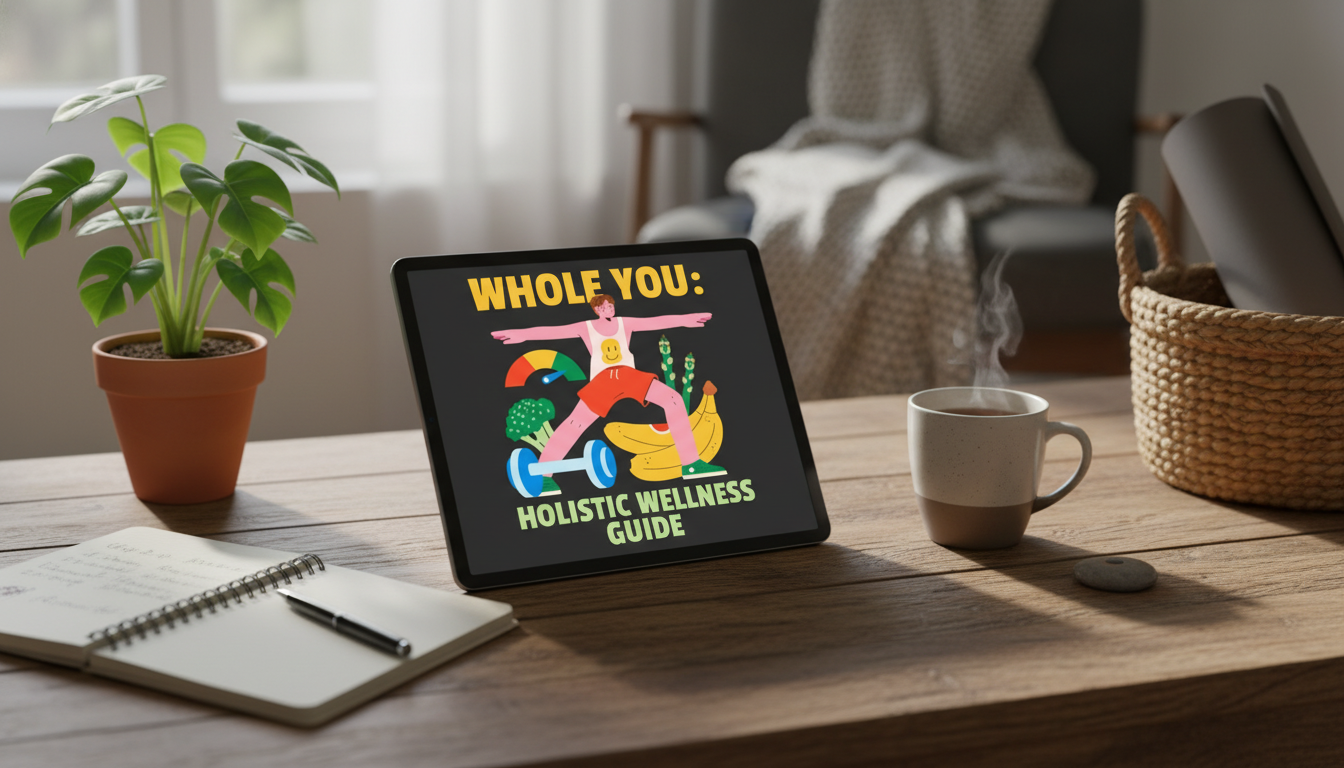
If you prefer a clear path you can revisit and build on, Whole You: Holistic Wellness Guide (digital download) offers an organized, beginner-friendly approach across nutrition, exercise, mental health, and self-care. It’s designed for digital use, so it’s easy to return to the sections you need and move at a sustainable pace.
To support focus and follow-through during your reset, Memory Boost Worksheets for Students & Adults can help you practice practical recall and planning tools—useful for habit tracking, routines, and staying consistent when life gets busy.
FAQ
What is a realistic holistic wellness routine for beginners?
Start with one small action in each pillar (nutrition, movement, mental health, self-care) and repeat it for a week. Then add only one new step at a time so your routine grows without becoming overwhelming.
How long does it take to feel results from a wellness reset?
Some benefits—like sleep quality, mood, and energy—can shift in 1–2 weeks, especially with more consistent meals and wind-down habits. Strength and body composition changes usually take longer, and consistency matters far more than intensity.
Can a wellness guide replace medical or mental health care?
No. Guides can support healthy routines, but they don’t diagnose or treat medical or mental health conditions; reach out to a qualified professional for persistent symptoms, injuries, or significant mental health concerns.











Leave a comment