AI Cleaning Schedule: A Routine That Sticks (Printable Kit)
Why an AI-assisted cleaning schedule feels easier (and works longer)
A reliable cleaning routine isn’t about doing more—it’s about doing the right tasks at the right frequency. An AI-assisted cleaning schedule turns “clean the house” into a realistic set of small, repeatable actions that match your home, your time, and your priorities. Instead of relying on motivation, you build a system: short daily resets, focused weekly sessions, and a simple rotation for the details that usually get ignored until they’re a problem.
The result is a home that stays consistently livable—without the all-day “catch-up clean” that steals weekends.
What makes an AI-assisted cleaning schedule different
- Breaks big goals into small tasks tied to real time blocks (5, 15, 30, or 60 minutes) so cleaning doesn’t require a whole afternoon.
- Adapts to home size, number of people and pets, allergy needs, and which rooms take the most wear.
- Balances visible wins (surfaces, floors) with quiet maintenance (filters, baseboards, vents) so nothing disappears for months.
- Uses a feedback loop: if tasks keep getting skipped, the plan adjusts frequency or splits a job into smaller steps.
If you’re trying to reduce dust, improve everyday hygiene, or keep up with a busy household, it also helps to follow public health guidance on cleaning vs. disinfecting when needed, such as the CDC’s cleaning and disinfecting recommendations.
Set the rules: priorities, constraints, and your minimum standard
Before you build any schedule, decide what “clean enough” means on your busiest week. A plan that only works when life is calm isn’t a plan—it’s a wish.
- Define non-negotiables: for many homes, this is kitchen hygiene, bathroom sanitation, and floors in high-traffic zones.
- Choose your weekly capacity: how many cleaning days and max minutes per day. Keep it doable even during late workdays or kid-heavy evenings.
- Assign friction reducers: store supplies where tasks happen (wipes under the bathroom sink, vacuum on the main floor) to cut setup time.
- Protect your hardest moment of the week: schedule the lightest tasks when energy is lowest.
If indoor air is a priority—especially with allergies or asthma—regular dust control and filter upkeep matter. The EPA’s indoor air quality guidance is a helpful reference for understanding why these “invisible” tasks pay off.
A simple framework that keeps the whole home under control
The easiest routines have layers. Daily work prevents chaos; weekly sessions keep rooms functional; monthly and seasonal rotations prevent buildup.
- Daily (5–15 minutes): dishes, counters, quick bathroom wipe, and a fast floor pass in key areas.
- Weekly (20–60 minutes per session): deeper focus by zone—kitchen, bathrooms, bedrooms, living areas, and a steady laundry cadence.
- Monthly: vents, appliances, baseboards, shower curtain/liner checks, inside trash cans.
- Quarterly/seasonal: declutter passes, carpet/upholstery refresh, refrigerator coils/filters (as applicable), window tracks, donation drop.
- One flex day weekly: for catch-up, guests, or one high-impact project.
Example weekly plan (adjustable by time and household needs)
| Day | 15-minute reset | 30–60 minute focus |
|---|---|---|
| Monday | Kitchen counters + sink | Kitchen deep clean: stovetop, microwave, cabinet fronts |
| Tuesday | Bathroom wipe + mirrors | Bathroom deep clean: toilet, shower/tub, floors |
| Wednesday | Tidy hot spots (entry, couch area) | Bedrooms: sheets, dust, quick declutter |
| Thursday | Laundry start + fold sprint | Floors: vacuum/mop main areas |
| Friday | Fridge check + trash out | Living areas: dust surfaces, spot-clean upholstery |
| Saturday | 10-minute whole-home pickup | Monthly task rotation (pick one): vents, baseboards, appliance detail |
| Sunday | Plan the week + restock supplies | Flex day or rest day |
Room-by-room checklist building blocks
Think in “building blocks” instead of perfection. When each room has a short standard set, it’s easier to stay consistent and easier to delegate.
Kitchen essentials
- Sanitize high-touch points: fridge handle, faucet, appliance buttons, light switches.
- Keep food-safety areas clean: cutting boards, counter zones where prep happens, and the sink.
- Maintain sink/drain freshness: quick rinse, occasional deodorizing, and wipe the basin dry when possible.
Bathroom essentials
- Focus on toilet, sink, shower surfaces, and floor edges where grime collects.
- Rotate in grout/scale care as needed (especially in hard-water areas).
Bedrooms essentials
- Set a linens cadence: weekly or biweekly sheets, depending on pets, sweating, or allergies.
- Dust + clutter control: nightstands, dressers, laundry zones.
- Quick under-bed check during weekly resets to prevent “lost item” buildup.
Living areas essentials
Laundry essentials
Personalize with AI without overcomplicating it
For households sensitive to fumes or irritation, choose gentler products and ventilate well; the American Lung Association’s guidance on cleaning supplies and indoor air is a practical reference.
Make it stick: small habits that prevent backsliding
Digital download kit: planner + printable checklists for a smarter routine
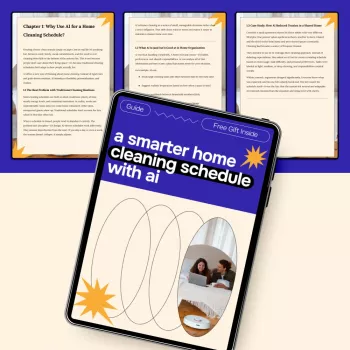
- A Smarter Home Cleaning Schedule with AI (digital download) is designed for fast setup: pick a schedule style, set your minimum standard, and print the pages you’ll actually use.
- For creators who also want a structured planning system in another area of life, AI Prompts for Content Calendars (digital download) offers a framework for building consistent weekly momentum with less last-minute scrambling.
FAQ
How often should bathrooms and kitchens be cleaned?
A solid baseline is a quick daily reset for sinks/counters and a weekly deeper scrub for toilets, showers/tubs, and stovetops. Add monthly detail items (like vents, grout checks, and inside trash cans), and increase frequency during illness seasons or with pets and kids.
What if there isn’t time to follow the schedule every week?
Use a minimum routine (10–15 minutes per day), keep one flex day for catch-up, and split big tasks into smaller steps. Adjust frequency to match your reality rather than abandoning the plan.
Can the checklists be used digitally as well as printed?
Yes—digital downloads can be used on a tablet or computer, and they’re also designed to print cleanly. Keeping separate pages for daily/weekly tasks and monthly/seasonal rotations makes the system easier to maintain.











Leave a comment