Ring Too Big? 10-Min At-Home Fixes That Really Work
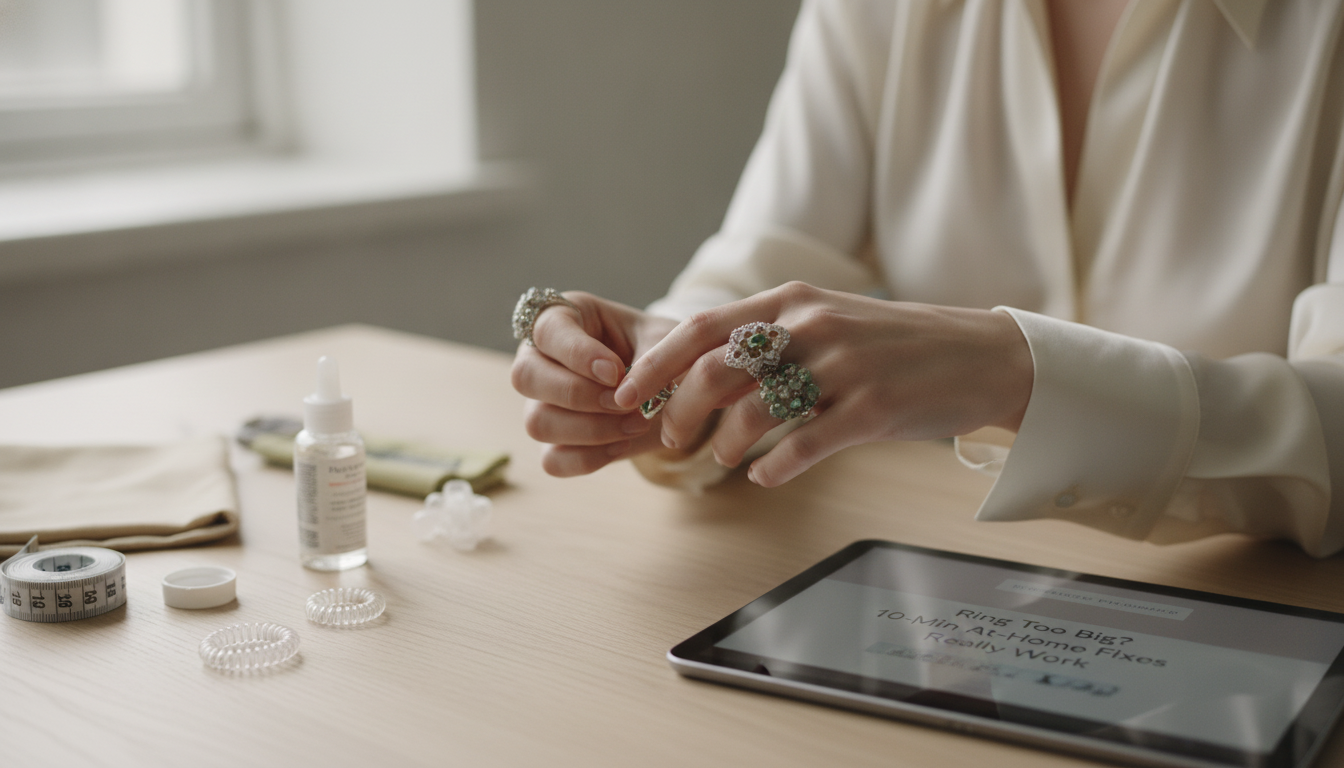
A Perfect Fit Without Saying Goodbye to Your Ring: At-Home Solutions for a Ring That’s Too Big
A ring that spins, slides, or threatens to slip off can turn a favorite piece into a daily worry. The good news: many fit problems can be improved at home with simple, reversible adjustments—often without resizing. This guide maps the most practical options, when each one works best, and how to protect stones and metal while improving comfort.
Why a Ring Suddenly Feels Too Big
Ring fit isn’t as “set it and forget it” as most people expect. Even when your ring size hasn’t changed on paper, real life can make a band feel noticeably looser.
- Daily finger changes: Temperature, hydration, salt intake, exercise, and travel can all affect finger size throughout the day.
- Seasonal shifts: Cold weather can shrink fingers, while heat can cause swelling—making fit feel inconsistent week to week.
- Body changes: Weight changes, hormonal shifts, and some medications can alter finger circumference.
- Top-heavy settings: A larger center stone can rotate even if the band is close to correct.
- Band shape and width: Wider bands usually feel tighter; thin bands can feel looser and rotate more easily.
- Wear over time: Worn shanks and thinning metal reduce friction and stability.
Quick Self-Check Before Trying Any Fix
Before adding anything to your ring, take a minute to confirm what’s actually happening. A good “diagnosis” keeps you from choosing a fix that irritates your skin or stresses the setting.
- Do a slip test: Your ring should pass over the knuckle with mild resistance and sit securely at the base without sliding when your hands are relaxed.
- Check rotation: If the stone repeatedly spins to your palm, top-heaviness may be the main issue.
- Inspect the setting: If prongs snag or stones feel loose, avoid pressure-based solutions until it’s checked professionally.
- Note the material: Softer metals and plated finishes can scratch more easily with temporary adjusters.
- Measure at the right time: Fingers are often largest in late afternoon; avoid measuring after exercise or a hot shower.
At-Home Ring Fit Options (Temporary, Reversible, and Low-Risk)
Most at-home options work by adding thickness, increasing friction, or reducing the interior diameter. The best choice depends on whether your ring slips off, spins, or changes with weather.
1) Sizing adjuster coils
Clear spiral wraps that wind around the shank to add thickness and reduce spinning. They’re a strong everyday option for modest looseness and are easy to remove if your fingers swell.
2) Ring sizing strips or tape
Quick grip for short-term wear. Use skin-safe materials, replace often, and watch for residue buildup that can make the ring feel grimy (and even looser).
3) Ring guard / ring keeper
A metal or plastic add-on that reduces the interior diameter. This is helpful when the ring slips over the knuckle too easily, but choose a style that won’t rub the neighboring finger.
4) Stacking with a thin band
Placing a snugger ring next to a loose ring can reduce rotation and make the set feel more secure—especially for top-heavy rings that “wander” during the day.
5) Bead-like comfort inserts (non-permanent versions)
Some removable solutions mimic sizing beads without soldering. These are often best when the ring isn’t dramatically oversized, but the setting constantly flips to the side.
When to stop
If a fix pinches, causes numbness, leaves deep impressions, or forces the ring over the knuckle with pain, remove it and reassess. Comfort and circulation matter more than “making it work.”
Which At-Home Fix Matches the Problem?
| Problem | Best at-home option | Why it helps | Watch-outs |
|---|---|---|---|
| Ring slides off easily | Sizing coil or ring guard | Adds thickness and reduces interior diameter | Can trap moisture; clean band regularly |
| Ring spins but won’t fall off | Stacking ring or stabilizing insert | Balances top-heavy settings and adds friction | May change comfort between fingers |
| Loose only in cold weather | Removable sizing strip | Easy seasonal adjustment | Adhesives/residue; replace frequently |
| Loose at base, tight at knuckle | Ring guard/keeper style | Helps stay centered without fully downsizing | Choose a style that won’t rub the adjacent finger |
| Band is very thin and rotates | Coil + stacking ring combo | Adds stability without permanent work | Avoid over-bulking; can feel crowded |
When Resizing or a Jeweler Visit Makes More Sense
Comfort and Jewelry Care While Improving Fit
For deeper care guidance, see GIA’s jewelry care and cleaning recommendations and Jewelers of America’s jewelry care tips.
Step-by-Step Troubleshooting: A Calm 10-Minute Fit Reset
A Guided Plan for Getting a Reliable Fit at Home
Helpful Digital Downloads
- Ring Too Big Fix Guide: A Perfect Fit Without Saying Goodbye to Your Ring (digital download)
- AI Prompts for Content Calendars | Digital Download eBook, Social Media Content Planner Prompts, AI Marketing Guide for Creators & Entrepreneurs
FAQ
How can a ring be made smaller at home without resizing?
Use reversible options like a sizing coil, sizing strip/tape, a ring guard/keeper, or stacking with a snug thin band. Keep the band clean and dry to prevent trapped moisture and irritation, and stop if you feel pinching or numbness.
Why does my ring spin even when it doesn’t feel too big?
Top-heavy settings, a thin band, finger taper, and low friction from lotions/soap can all cause rotation even if the size is close. Stabilizing with stacking rings or a removable insert/guard often centers the setting without permanent changes.
When is it better to resize a ring instead of using an adjuster?
If the ring is more than about a half-size too large, feels unreliable with temporary fixes, or shows thinning metal, sharp edges, or loose stones, resizing (or a jeweler evaluation) is safer. Intricate settings and eternity bands may need professional guidance to avoid damage.











Leave a comment