Stress-Relief Knitting Checklist for Calm, Repeatable Sessions
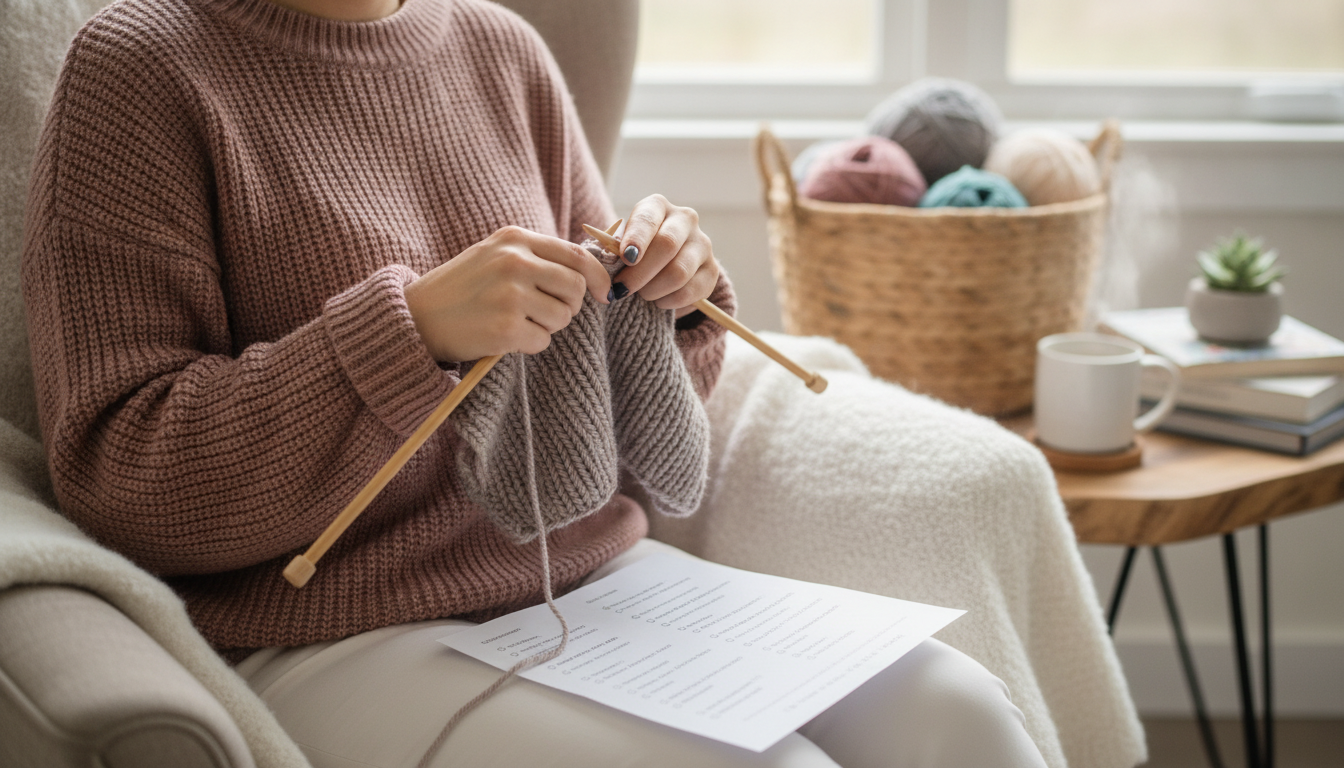
Knitting as a “Pause Button”: A Calm, Repeatable Routine
Knitting can be more than a hobby: the steady rhythm, tactile focus, and gentle progress can create a reliable pause button for a busy mind. A simple checklist turns that soothing potential into a repeatable routine—so it’s easier to begin, easier to stay present, and easier to end a session feeling calmer than when it started.
Stress affects the body in real, measurable ways, from muscle tension to sleep disruption, which is why small daily practices that encourage relaxation matter. If you’d like deeper background on stress and the body’s response, the American Psychological Association and Harvard Health Publishing both offer helpful overviews.
Why knitting can feel calming
Calm often comes from simple inputs repeated consistently. Knitting naturally supports that kind of steadying experience:
- Repetitive hand motions can support a steady pace that’s easier for the mind to follow than racing thoughts.
- Light structure (counting stitches, tracking rows) provides just enough focus to crowd out worry spirals without feeling like “work.”
- Sensory comfort from soft textures and warmth may help the body settle during downtime.
- Visible progress—even a few rows—can restore a sense of control when the day feels chaotic.
Set up a stress-relief knitting space in under 5 minutes
The fastest way to protect a calming habit is to reduce friction. A “default spot” and a tiny kit of essentials can make the difference between knitting happening and not happening.
- Choose a default spot (chair, couch corner, or table) and keep essentials nearby.
- Prep lighting to avoid squinting; eye strain can quietly increase tension.
- Keep a small basket with yarn, needles, scissors, stitch markers, and a tape measure.
- Add one comfort cue—tea, a blanket, or a gentle playlist—to signal “slow down.”
Quick setup checklist
| Step | What to do | Why it helps |
|---|---|---|
| Comfortable seat | Support back/arms; feet grounded if possible | Reduces muscle tension and fidgeting |
| Lighting check | Bright, even light; avoid glare | Helps prevent headaches and frustration |
| Tools in reach | Basket or pouch with core tools | Minimizes interruptions that break calm |
| Phone boundaries | Silent mode or focus timer for 10–20 minutes | Protects the relaxing rhythm |
The ultimate stress-relief knitting checklist (before, during, after)
Think of this as a gentle “container” for your session. You’re not trying to optimize productivity—you’re making calm easier to access.
Before you start (2 minutes)
- Pick a simple project (dishcloth, scarf, basic hat) that doesn’t demand constant problem-solving.
- Choose a comfort yarn and needle size that feels good in the hands; scratchy textures can increase irritability.
- Set a gentle goal (10 minutes, one repeat, or “to the next marker”), not a performance target.
During your session (keep it soft)
- Breathe with the rhythm: inhale for a few stitches, exhale for a few stitches—natural, not forced.
- Notice shoulder/jaw tension; every few rows, drop shoulders and soften your grip on the needles.
- Use a lifeline or row counter to reduce worry about mistakes; reassurance supports relaxation.
After you finish (1 minute)
- End with one tidy step: wrap yarn and place needles safely so the next session starts smoothly.
- Take a completion pause: notice progress and how your body feels (warm hands, slower breath, less tension).
Choosing projects that support calm (not frustration)
The “wrong” project can turn a calming session into a problem-solving marathon. Keep relaxation-friendly options within reach.
- Start with predictable patterns: garter, stockinette, ribbing, simple stripes—patterns that let the mind rest.
- Use low-stakes items during stressful seasons: swatches, washcloths, coaster sets, or simple charity knits.
- Keep one comfort project always available—something familiar for high-stress days.
- Save complex lace or intricate colorwork for times when extra concentration feels enjoyable rather than draining.
Common stress points—and calm fixes
- Mistakes: treat them as optional decisions—fix now, park it with a marker, or leave it if it doesn’t affect fit.
- Time pressure: switch from “finish” thinking to “minutes enjoyed” thinking; choose a timer over a deadline.
- Hand fatigue: try larger needles, stretch hands, or alternate with a different project texture to reduce strain.
- Decision overload: pre-select 2–3 favorite yarns and 2–3 go-to patterns specifically for relaxing sessions.
Make the routine stick: gentle tracking and resets
Consistency comes from making the routine easy to return to—especially on days when motivation is low.
Printable digital checklist for calm knitting sessions
For a structured, printable option, see: The Ultimate Stress-Relief Knitting Checklist | Knitting and Stress Reduction Guide | Digital Download Checklist for Calm & Relaxation.
If you also enjoy tracking creative routines more broadly (projects, weekly plans, or habit notes), you may like: AI Prompts for Content Calendars | Digital Download eBook, Social Media Content Planner Prompts, AI Marketing Guide for Creators & Entrepreneurs.
FAQ
How long should a stress-relief knitting session be?
Ten to twenty minutes is a reliable minimum for many people, especially if you use a timer and keep the project simple. Consistency matters more than duration, and it can help to stop while you still feel calm so the next session feels inviting.
What are the best knitting projects for relaxation?
Choose simple, repetitive patterns like garter stitch scarves, dishcloths, or basic hats, paired with a comfortable yarn texture. Projects with low “correction pressure” (where minor imperfections don’t matter) tend to feel the most soothing.
Can knitting help with anxiety or stress?
Knitting can support relaxation by combining repetitive movement with focused attention, which may help the mind settle for a while. If anxiety or stress feels persistent or overwhelming, consider talking with a qualified professional for personalized support.









Leave a comment