Modern Etiquette: Texting, Social Media, RSVPs & Boundaries
What “Modern Etiquette” Means Today
Modern etiquette isn’t about being formal—it’s about making day-to-day interactions smoother, especially when most plans, updates, and misunderstandings start on a screen. The most useful definition is simple: etiquette is the set of habits that helps other people feel respected and informed.
- Etiquette as clarity: making expectations easy to understand (timing, tone, follow-through).
- Etiquette as consideration: lowering friction for other people (confirming details, replying, not oversharing).
- Etiquette as boundaries: saying no, responding late, or disagreeing without escalating.
- A practical mindset: “kind + clear + timely” works across friends, family, work, and community.
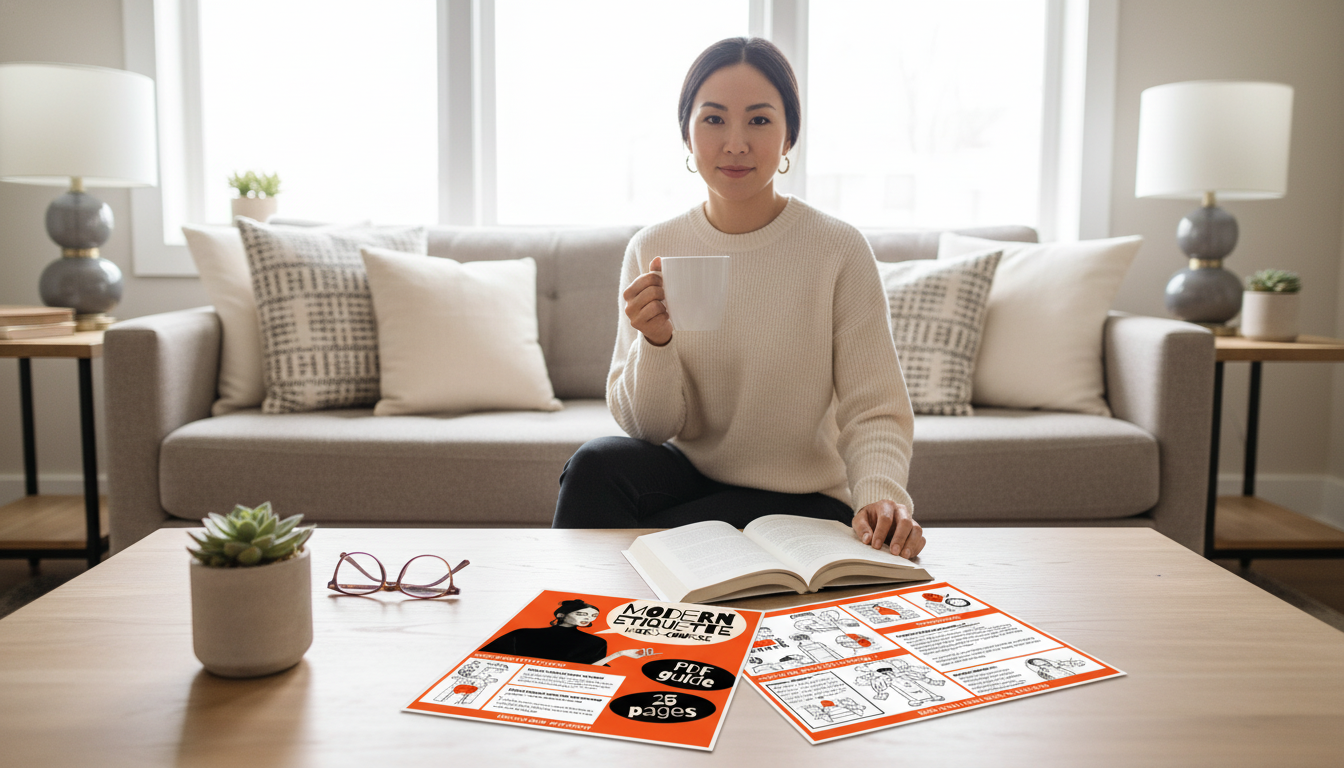
If you want a structured, printable set of habits and scripts, the Modern Etiquette Micro-Course | Printable Digital Etiquette Guide is an easy way to keep the basics handy when you’re busy.
Texting Etiquette That Prevents Misunderstandings
Texts are fast, but they’re also missing tone, facial cues, and context—so small tweaks can prevent big confusion.
- Reply timing: respond quickly when it affects logistics (meeting up, safety, time-sensitive plans). For casual chats, it’s usually fine to answer later—especially if you’re consistent.
- Tone checks: short messages can read as sharp. Add a softener when declining or correcting (“Quick note,” “Just to clarify,” “Not sure if I missed something…”).
- Group chats: avoid side conversations that exclude others. If a decision gets made, summarize it for everyone so nobody is guessing.
- Skip “soft maybes”: “Maybe” often creates limbo. Offer a clear yes/no and a specific time—or propose an alternative.
- Sensitive topics: move to a call or voice note when nuance matters (conflict, money, health, relationship topics).
- Read receipts and “seen”: treat them as imperfect signals, not a contract. People open messages by accident, get interrupted, or need time.
Quick Text Templates for Common Situations
| Situation | Message you can send | Why it works |
|---|---|---|
| Running late | “Running about 10 minutes behind—ETA 6:20. Sorry for the delay.” | Gives a specific ETA and acknowledges impact. |
| Declining an invite | “Thanks for inviting me—can’t make it this time, but I hope it’s great.” | Warm, direct, no over-explaining. |
| Need more time | “I saw this and want to respond thoughtfully—can I get back to you tomorrow?” | Sets expectation and prevents silence. |
| Confirming plans | “Confirming: Friday at 7 at [place]. Still good for you?” | Reduces last-minute confusion. |
| Stopping a back-and-forth | “Want to hop on a quick call to finalize?” | Shifts to a better channel for decisions. |
Social Media Manners: Posting, Tagging, and Messaging
Online etiquette is less about “rules” and more about consent, context, and not turning someone else into content without thinking. Research on social platforms also shows how quickly norms shift and how differently people experience the same feed, which is why a little care goes a long way (see Pew Research Center’s social media coverage).
- Before posting others: ask when unsure; default to permission for kids, private events, or vulnerable moments.
- Tagging etiquette: tag only when relevant. Avoid tagging for reach if it puts someone on the spot professionally or socially.
- Comment tone: disagree without dunking—address ideas, avoid personal digs and pile-ons.
- DM boundaries: keep asks concise. If you have a multi-part request, start by asking if they have bandwidth first.
- Credit and attribution: credit quotes, photos, and ideas; don’t crop watermarks. If you’re inspired, say so.
- Sharing sensitive news: don’t “announce” someone else’s milestone (job changes, pregnancies, breakups) before they do.
For a deeper look at how digital communication can affect stress and well-being, the APA’s topic coverage on social media and the internet offers helpful context.
RSVPs and Invitations: The Polite, Clear Way to Commit
RSVP etiquette is basically reliability in writing. A “yes” affects food, seating, budgets, and the host’s peace of mind.
- Treat an RSVP as a promise: respond by the deadline even if the answer is no.
- Plus-ones: only assume one if it’s explicitly offered. If you’re uncertain, ask once, politely, and accept the answer.
- Dietary needs: share relevant restrictions early and briefly. (“Just a heads-up: I’m allergic to nuts.”)
- Cancellations: notify as soon as possible, apologize simply, and—when appropriate—offer a make-good gesture.
- Hosts: reduce no-shows by sending one confirmation with key details (time, address, parking, dress expectations) in one place.
For classic guidance that still applies in modern settings, the Emily Post Institute’s etiquette advice is a reliable reference point.
Everyday Politeness That Feels Natural (Not Formal)
Handling Awkward Moments with Grace
A Simple Weekly Practice to Build Better Habits
If you’re planning posts and want your online presence to feel consistent and intentional (without sounding robotic), AI Prompts for Content Calendars | Digital Download eBook can help you map content in a way that respects your audience’s attention and your own boundaries.
FAQ
How long is too long to wait before replying to a text?
For logistics or time-sensitive plans, waiting more than a couple of hours can create real inconvenience—send a quick acknowledgment if you can’t answer fully. For casual conversation, later the same day (or within 24 hours) is typically fine as long as you’re consistent and set expectations when needed.
Is it rude to leave someone on read?
Not necessarily—read indicators are imperfect and don’t show what’s happening on the other person’s end. If you want to be polite, send a short acknowledgment or a timeline (“I’ll reply tonight”); no response can also be reasonable for spam, boundary issues, or a conversation that’s already concluded.
What’s the most polite way to cancel after RSVP’ing yes?
Cancel as early as possible, apologize briefly, and keep the message clear: “I’m so sorry—something came up and I can’t make it tonight.” If the host is paying per person (tickets, plated meals, small gatherings), consider offering to cover your spot or sending a small make-good gesture.












Leave a comment